 Pin It
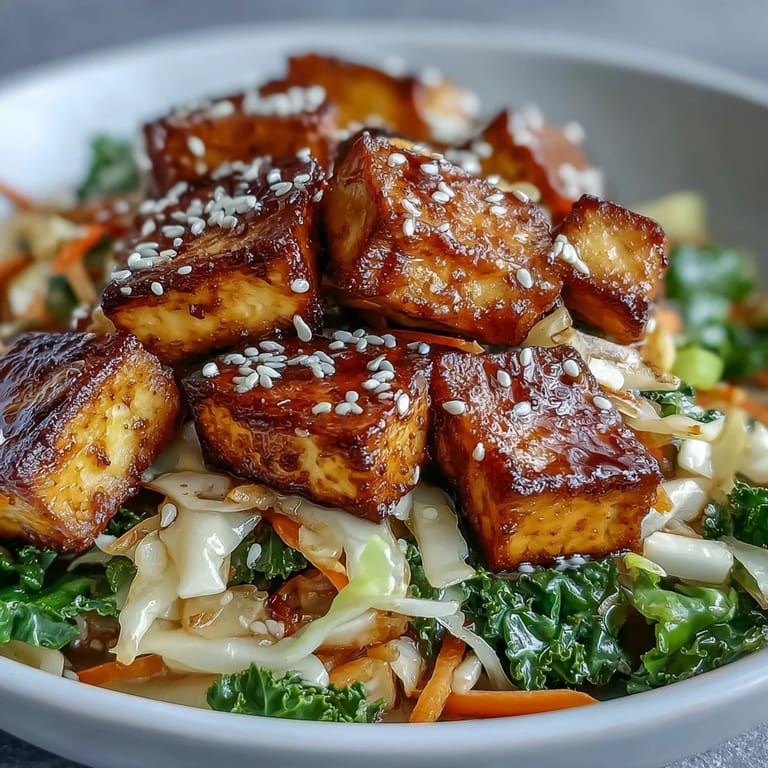
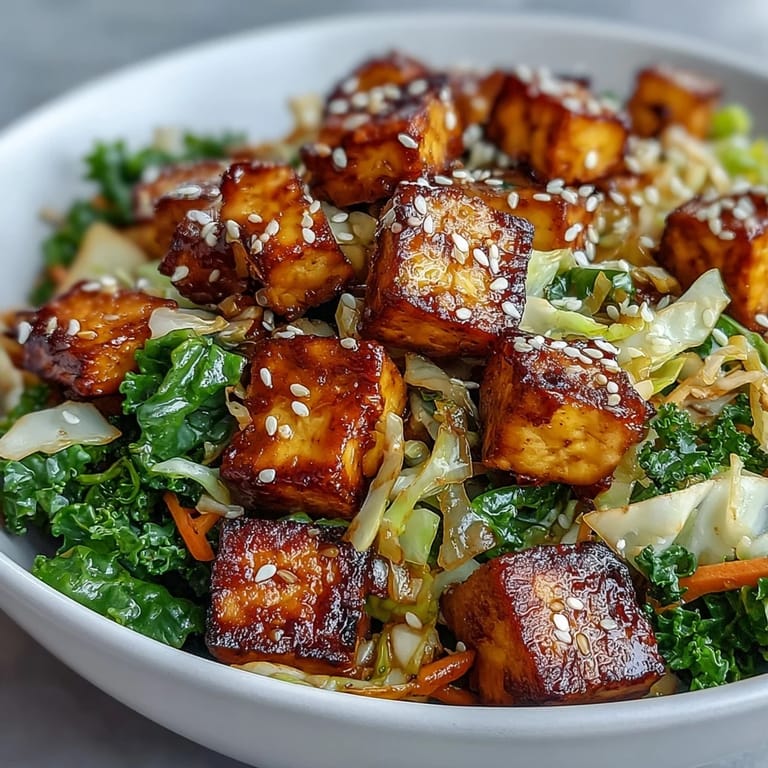
 There's something about the sizzle of tofu hitting a hot skillet that makes me feel like I'm cooking something special, even on a Tuesday night when the fridge is half-empty and energy is low. This bowl came together one evening when I was craving that crispy, savory satisfaction of an egg roll but wanted something that felt lighter and more forgiving to put together. The magic happens when those golden tofu cubes meet a tangle of vibrant greens and that umami-rich sauce—suddenly it doesn't feel like a weeknight meal, it feels intentional.
I made this for my friend who'd just gone vegan and kept apologizing about it at every meal we shared together. Watching her face light up when she realized the tofu actually had texture, that the bowl tasted like something she genuinely wanted to eat and not just what she felt obligated to order—that moment made me realize how much effort we put into making plant-based food feel like a compromise when it doesn't have to be.
Ingredients
- Extra-firm tofu, pressed and cubed: This is non-negotiable if you want that satisfying bite instead of mush; pressing removes excess moisture so it can actually crisp up when it hits the pan.
- Cornstarch: Just a tablespoon transforms the tofu surface into something golden and slightly crispy, almost like a delicate crust.
- Neutral oil: Choose one with a high smoke point so it doesn't burn while your tofu gets its moment of glory.
- Green cabbage: Sliced thin so it cooks just enough to soften but keeps that slight crunch that makes the whole bowl feel alive.
- Kale and spinach: They wilt down dramatically but add serious nutritional depth and that earthy undertone that makes the sauce sing.
- Carrot, julienned: The sweetness cuts through the umami in the best possible way, and those thin ribbons cook evenly without turning mushy.
- Garlic and ginger: These two are the heart of the aromatics; fresh ginger especially makes the whole pan smell like something worth getting excited about.
- Soy sauce or tamari: Low-sodium because you want to taste everything else too, not just salt.
- Rice vinegar: A small amount brightens everything without overpowering; it's the whisper you didn't know you needed.
- Toasted sesame oil: Drizzle this at the end for that unmistakable depth that says you know what you're doing.
- Maple syrup or agave: Just a teaspoon rounds out the sauce with a hint of sweetness that balances the savory and funky notes.
- White pepper: A different kind of heat from black pepper, it blends more seamlessly into the sauce without being obvious.
Tired of Takeout? 🥡
Get 10 meals you can make faster than delivery arrives. Seriously.
One email. No spam. Unsubscribe anytime.
Instructions
- Press your tofu like you mean it:
- Wrap the block in a clean kitchen towel or paper towels and let it sit under something heavy—a cast iron skillet, some cans, whatever you have—for at least 10 minutes. The drier it is, the crispier it'll become in the pan.
- Cube and coat:
- Cut the pressed tofu into bite-sized cubes and toss them with cornstarch as if you're giving them a light dusting of armor. The starch is what creates that subtle golden texture.
- Get the pan properly hot:
- Heat your oil over medium-high heat until it shimmers and moves easily across the surface. A hesitant drizzle of water should sizzle immediately when it hits the pan.
- Pan-fry the tofu until golden:
- Add the cubes in a single layer and don't fuss with them for at least 2-3 minutes; you want them to develop that golden crust on the bottom before turning them. Give them all sides their moment, about 6-8 minutes total, then set them aside on a clean plate.
- Build the aromatics:
- In that same pan with all the fond, add garlic, ginger, and green onions. The sizzle should be immediate and fragrant. Let them bloom for about a minute until your kitchen smells unreal.
- Stir-fry the vegetables:
- Add cabbage, kale, and carrot in that order, stirring constantly for 3-4 minutes. You're looking for that moment where everything is tender but still has a slight snap to it, still vibrant in color.
- Add the spinach:
- Stir in the spinach and let it wilt down in about 1 minute. It'll reduce dramatically but add incredible body and nutrition to the bowl.
- Make your sauce:
- While the vegetables are cooking, whisk together soy sauce, rice vinegar, sesame oil, maple syrup, and white pepper in a small bowl until the maple syrup is fully dissolved and everything looks glossy.
- Bring it all together:
- Return the tofu to the pan, pour the sauce over everything, and toss gently for about 2 minutes until it's all coated and heated through. The sauce should cling to the vegetables like it was meant to be there.
- Plate and garnish:
- Divide among bowls and top with sesame seeds, extra green onions, and chili flakes if you want a little heat. Serve hot so everything's still steaming.
 Pin It
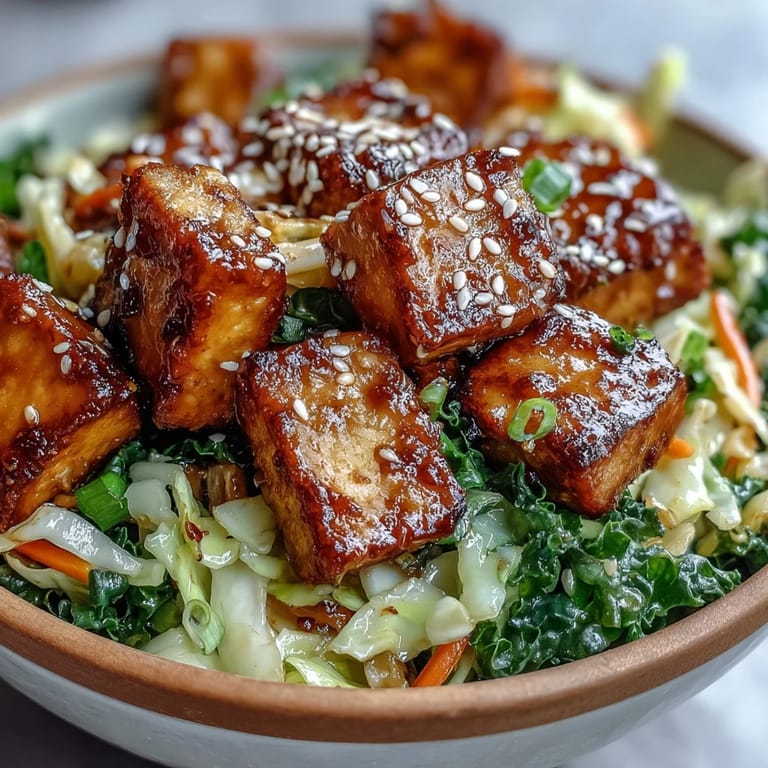
 My partner ate this straight from the bowl standing at the counter without even bothering to sit down, which is how I know it hits a certain kind of hunger that goes beyond just being hungry. There's something about having all those textures and flavors in one place that feels complete and satisfying without being heavy.
Why the Technique Actually Matters Here
The difference between tofu that's memorable and tofu that's forgettable comes down to those first few minutes in the hot pan. I learned this the hard way by trying every shortcut under the sun—not pressing it properly, using soft tofu because I forgot to buy extra-firm, turning it too early. Once I committed to the actual method, everything changed. The cornstarch is the secret weapon that so many people skip, but it's what transforms the surface into something that catches the heat and develops actual flavor instead of just absorbing whatever sauce you throw at it.
Making It Your Own
This bowl is endlessly flexible once you understand the basic structure. I've made it with bok choy when I was out of kale, stirred in cooked quinoa when I wanted it heartier, added crispy wonton strips for extra crunch on a night when I felt like showing off. The sauce is what ties everything together, so that's the part I'd keep consistent, but the vegetables can be whatever your crisper drawer or mood demands. Sometimes I add a handful of shredded purple cabbage just for the visual drama.
Serving and Storage
This bowl is best eaten right after you make it while everything still has texture and the tofu is at its crispiest. If you have leftovers, store them separately from the sauce and reassemble when you're ready to eat; the vegetables won't get soggy that way and the tofu will reheat better. I've found that a quick warm-up in a skillet brings back some of that original texture better than the microwave, though both work if you're in a rush.
- Serve over rice or noodles if you want it to feel more like a complete meal.
- Leftover sauce keeps in the fridge for about a week and works beautifully on other grain bowls or roasted vegetables.
- Make a double batch of the sauce and store it in a small jar for quick weeknight meals.
 Pin It
 This bowl reminds me why I love cooking in the first place—it's simple enough that you can do it on an ordinary evening, but intentional enough that it feels like you're taking care of yourself or someone you love. That's the sweet spot where real food lives.
Recipe Questions & Answers
- → How do I get crispy tofu?
Press the tofu well for at least 15 minutes to remove excess moisture, then coat cubes evenly in cornstarch before pan-frying. Cook over medium-high heat until golden on all sides, about 6–8 minutes total.
- → Can I make this ahead?
Yes! Prepare all vegetables and sauce up to 2 days ahead. Store separately in the refrigerator. The tofu is best cooked fresh, but you can cube and press it ahead of time.
- → What can I serve with this?
Brown rice, quinoa, or rice noodles make excellent additions for a heartier meal. For extra crunch, top with crushed peanuts or crispy wonton strips.
- → Is this gluten-free?
Yes, if you use tamari instead of soy sauce. Always double-check all ingredient labels, especially condiments, to ensure they're certified gluten-free.
- → Can I substitute the vegetables?
Absolutely. Try bok choy, napa cabbage, bell peppers, or snap peas. The key is maintaining a mix of textures and colors for the most vibrant bowl.