 Pin It
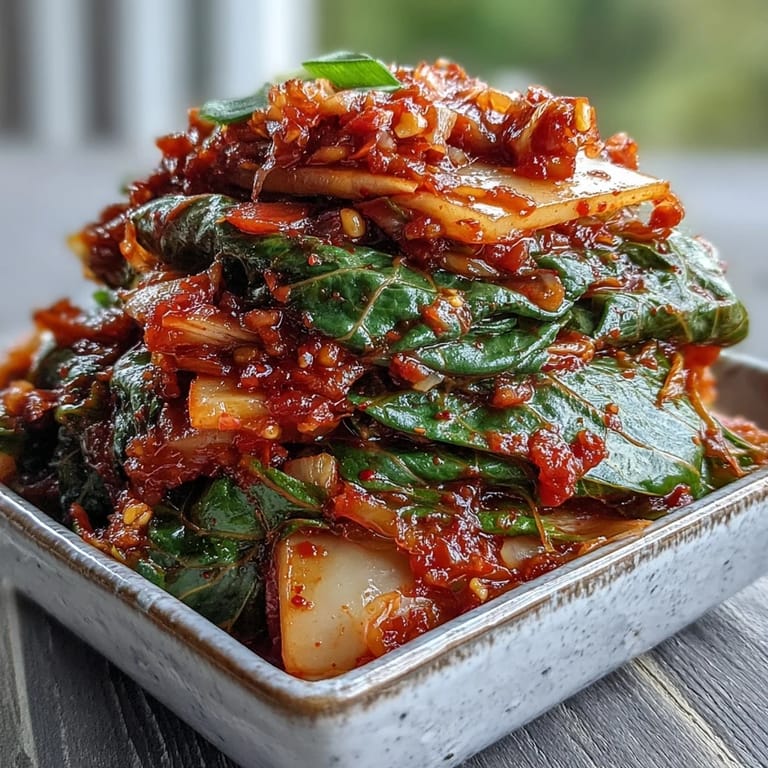
 My first batch of kimchi came about by accident—I'd bought a massive napa cabbage at the farmer's market with no real plan, and my Korean coworker mentioned offhandedly that I should just ferment it. What started as a skeptical kitchen experiment turned into an obsession the moment I tasted that first tangy, spicy, crunchy bite straight from the jar three days later. Now I can't imagine my kitchen without a jar bubbling quietly on the counter, and honestly, it's become my answer to almost everything: served alongside eggs for breakfast, tucked into rice bowls, or eaten straight from the jar at midnight when I'm craving something alive and bold.
I'll never forget making a massive batch for my partner's birthday dinner—three jars lined up on the counter, each one releasing little puffs of gas when opened, the whole apartment smelling like a Korean night market. Watching their face light up when they tasted it was worth every bit of the brining, blending, and massaging involved. That's when I realized kimchi isn't just food; it's a small act of care you're literally letting ferment into existence.
Ingredients
- Napa cabbage: This is your base—choose one that feels dense and has pale green outer leaves, as those older heads have better structure for holding the spice paste.
- Daikon radish: The julienne adds a gentle sweetness and crunch that doesn't overpower; thinner cuts mean it ferments faster and melds into the overall texture.
- Scallions: Don't skip these—they add a fresh allium note that brightens everything, even after weeks of fermentation.
- Coarse sea salt: This isn't about flavor; it's about osmosis and drawing out the cabbage's water to create the brine that supports fermentation.
- Korean red chili flakes (gochugaru): The heart of the heat—start conservative and taste as you go, because this is where personal preference really matters.
- Fish sauce: Yes, it smells intense on its own, but it's the umami backbone that makes kimchi taste like kimchi; use a quality brand if you can find one.
- Rice flour: This creates a subtle, glossy paste that coats everything evenly and feeds the fermentation process with its starches.
Tired of Takeout? 🥡
Get 10 meals you can make faster than delivery arrives. Seriously.
One email. No spam. Unsubscribe anytime.
Instructions
- Prep your cabbage:
- Cut lengthwise into quarters, then chop into rough 2-inch pieces—don't overthink the size, just aim for something you can grab and chew easily. The irregularity actually helps them ferment unevenly in the best way.
- Brine the cabbage:
- Dissolve the salt in cold water and submerge the cabbage under a weighted plate for 2 hours, tossing every 30 minutes. You'll feel the texture soften and see the brine turn cloudy as the cabbage releases its water—this is exactly what you want.
- Rinse thoroughly:
- Drain and rinse under cold water 2-3 times until the cabbage tastes pleasantly salty but not aggressively so. Over-rinsing kills the ferment; under-rinsing makes it unpleasantly salty—find the balance.
- Make the paste:
- Whisk rice flour with 150 ml water in a small saucepan over medium heat until it thickens into a glossy, translucent mixture, about 1-2 minutes. This slight gelatinization is crucial; it helps everything stay suspended during fermentation instead of settling to the bottom.
- Blend the aromatics:
- Once the rice paste cools, combine it with garlic, ginger, onion, fish sauce, and sugar in a blender, pulsing until completely smooth. Stir in the gochugaru by hand—this gives you control over the heat level and prevents over-blending the chili.
- Massage it all together:
- Put on gloves and combine the drained cabbage with radish, carrot, and scallions in a large bowl, then add the spice paste and massage everything for 3-5 minutes until every piece is coated and the vegetables start to glisten. This isn't aggressive—it's more of a thorough, loving toss.
- Pack the jars:
- Transfer into clean glass jars, pressing down firmly as you go to eliminate air pockets and submerge everything under its own brine. Leave about an inch of headspace at the top for the gases that will build up.
- Begin fermentation:
- Seal the jars and leave them at room temperature away from direct sunlight for 1-2 days, opening them once daily to release accumulated gas. You'll notice fizzing and bubbling—that's the live cultures doing their thing.
- Taste and store:
- After 48 hours, crack open a jar and taste; the longer it sits, the funkier and more sour it becomes, so move it to the fridge once it hits your personal sweet spot. It'll keep fermenting slowly in the cold for months, deepening and developing as it goes.
 Pin It
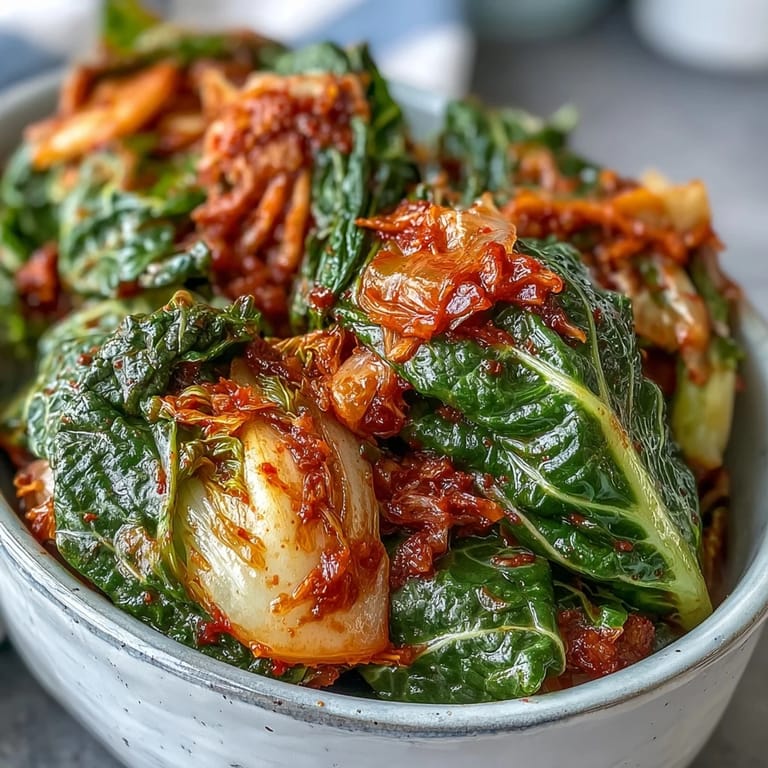
 There's a specific moment that happens around day three when you open a jar and catch that first real whiff of fermentation—that funky, complex, absolutely unmistakable aroma—and you realize you've actually created something living and transforming right on your counter. It's oddly humbling and thrilling at the same time.
Finding Your Spice Level
I learned the hard way that gochugaru varies wildly between brands and origins, so I now taste the paste before committing to the full batch. Start with 3 tablespoons, blend everything, and taste a small piece of cabbage coated in it—you can always add more heat, but you can't take it back. If you want milder kimchi, add grated apple or pear to the paste; the natural sweetness mellows the chili without compromising fermentation.
Fermentation Timing and Temperature
Warmer kitchens ferment faster—mine takes about 2 days at 68-72°F—while cooler environments might need up to a week or more. The goal is tanginess you can taste and a slight fizz when you open the jar, signaling active fermentation. Once it reaches that point, refrigerate it to dramatically slow the process; it'll continue developing complexity for weeks, and the flavor will deepen rather than turn unpleasantly sour.
Making It Your Own
After a few batches, you'll have opinions about everything—whether you want it funkier, spicier, crunchier, or loaded with extra vegetables like mushrooms or cucumbers. The basic formula stays the same; the personality is entirely yours.
- Try adding a thin slice of ginger or dried shiitake mushroom to each jar for umami depth.
- For a sweeter-spicy version, include a tablespoon of honey or mirin in the paste and reduce the chili slightly.
- Store extra jars in the fridge where fermentation slows dramatically, keeping your stash fresh for months.
 Pin It
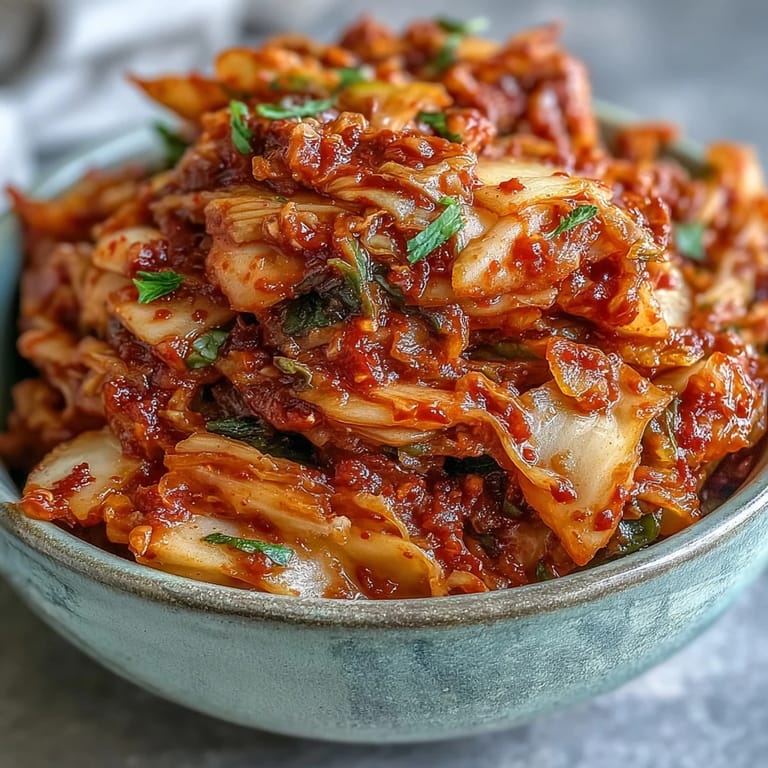
 Kimchi is one of those recipes that teaches you patience and trust in a process you can't fully control, which feels like a gift in a kitchen full of precise measurements. Once you make your first jar, you'll understand why it's been a staple for centuries.
Recipe Questions & Answers
- → How long does kimchi fermentation take?
Kimchi typically ferments at room temperature for 1–2 days, then continues developing flavor in the refrigerator for several weeks. Taste after 48 hours and refrigerate when desired tanginess is achieved.
- → What makes kimchi spicy?
Korean red chili flakes called gochugaru provide the characteristic heat and vibrant red color. Adjust between 3–5 tablespoons depending on your spice preference.
- → Is kimchi vegan?
Traditional kimchi uses fish sauce, but you can easily make it vegan by substituting with soy sauce or vegan fish sauce alternatives. All other ingredients are plant-based.
- → Why rinse the cabbage after salting?
Rinsing removes excess salt to prevent overly salty results while still preserving the cabbage texture. Thorough rinsing ensures balanced flavor in the final product.
- → Can I shorten the fermentation time?
You can eat kimchi immediately as fresh cucumber-style, but true fermented flavor develops over 48 hours. Refrigeration slows fermentation significantly, allowing you to enjoy it at your preferred sourness level.
- → What do I serve with kimchi?
Kimchi pairs wonderfully with steamed rice, in soups like kimchi jjigae, fried with rice, alongside eggs, or simply as a zesty side dish to complement any meal.