 Pin It
 I discovered seaweed salad on a humid summer afternoon at a tiny Japanese market, watching an elderly vendor arrange dark strands of wakame with the care of an artist. She caught me staring and offered me a small taste from her own lunch, the sesame-ginger dressing bright on my tongue like nothing I'd experienced before. That moment transformed how I thought about seaweed, from something intimidating into something I'd crave on the hottest days. Now I make it constantly, and it's become my go-to dish when I want something that feels both nourishing and effortlessly elegant.
My partner took one bite at a dinner party and asked for seconds before anyone else had finished their first plate, which was shocking because he'd been convinced seaweed salad was "that weird stuff." Watching his skepticism dissolve with that first forkful taught me something about how the right dish can quietly change someone's mind about food. Now he requests it by name, and I've learned that the best recipes are the ones that convert the unconvinced.
Ingredients
- Dried wakame seaweed: This delicate sea vegetable is packed with minerals and transforms completely when soaked, becoming tender and almost silky. Buy it from Asian markets or the international aisle, and don't overpay for fancy brands—the standard stuff performs just as well.
- Toasted sesame oil: This is non-negotiable because it carries the entire personality of the dressing. The toasted variety has a deeper, richer flavor than raw sesame oil, and a little goes a long way.
- Rice vinegar: Its mild sweetness balances the umami without the harshness of white vinegar, creating that signature clean, bright taste.
- Fresh ginger: Grate it just before mixing the dressing so the oils are alive and the flavor sharp. Bottled ginger tastes tired in comparison.
- Cucumber and carrot: These vegetables add crunch and color, but more importantly, they absorb the dressing and become part of the whole rather than just decoration.
- Scallions: Raw scallions bring an onion sharpness that brightens everything, so don't skip them or substitute with something mild.
- Soy sauce or tamari: Use low-sodium because you're controlling the salt level yourself, and choose tamari if gluten sensitivity matters at your table.
- Sesame seeds: Toast your own if you can—they develop a nuttiness that pre-toasted versions from a jar can't match.
Tired of Takeout? 🥡
Get 10 meals you can make faster than delivery arrives. Seriously.
One email. No spam. Unsubscribe anytime.
Instructions
- Rehydrate the seaweed gently:
- Submerge the dried wakame in a bowl of cold water and watch as it blooms and softens, usually within 7–10 minutes. Drain it thoroughly and squeeze with your hands to remove excess water—this step matters because soggy salad is nobody's goal.
- Assemble your vegetables:
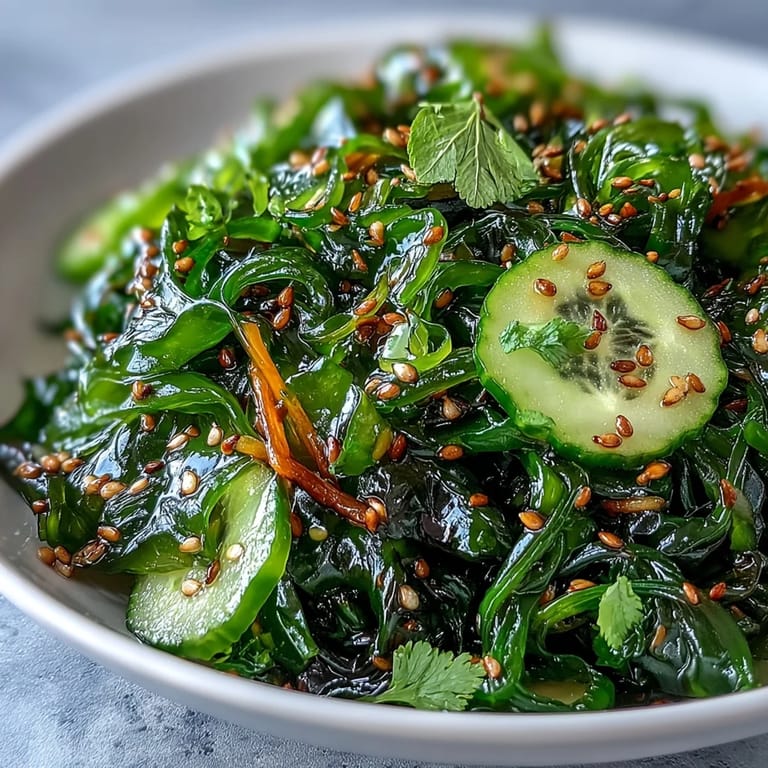
- Thinly slice the cucumber so it drinks in the dressing, julienne the carrot for elegance and even texture, and slice the scallions at an angle. Combine everything in a large bowl and take a moment to appreciate how colorful this already looks.
- Whisk the dressing with intention:
- In a separate small bowl, whisk together the sesame oil, rice vinegar, soy sauce, freshly grated ginger, sweetener, sesame seeds, and chili flakes if you like heat. This dressing should taste bold and balanced—taste as you go and adjust the acid or sweetness to match your palate.
- Bring everything together:
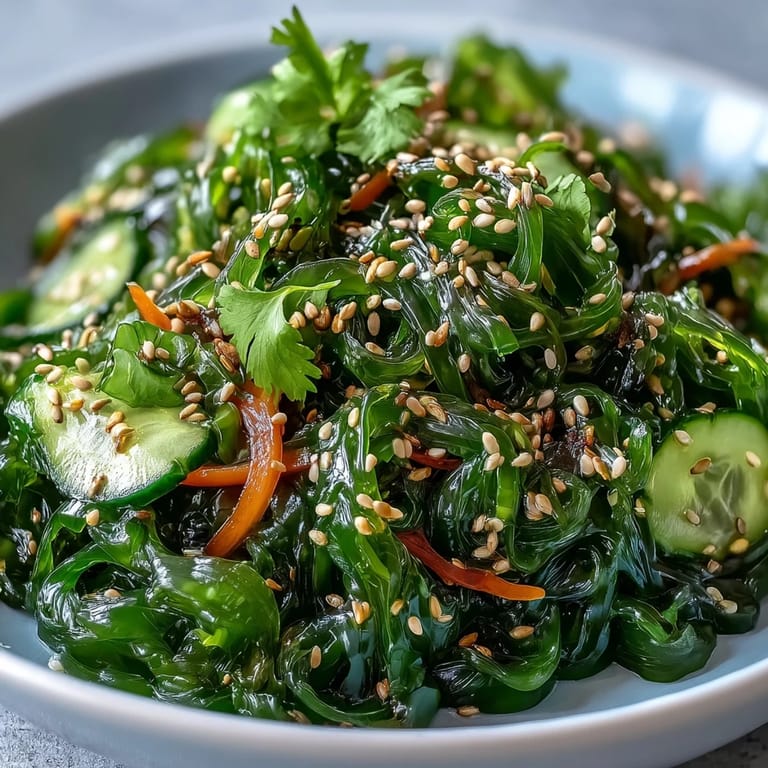
- Pour the dressing over the seaweed and vegetables and toss gently with your hands or tongs, making sure every strand of seaweed gets coated. The salad will look shiny and alive when it's ready.
- Garnish and serve:
- Sprinkle with extra toasted sesame seeds and fresh cilantro or parsley if you have it. Serve immediately for maximum crunch, or chill for 15–30 minutes if you prefer softer textures and melded flavors.
 Pin It
 There's something almost meditative about squeezing water from rehydrated seaweed, this slippery dark strand that becomes something entirely new once you stop treating it with fear. I've found that the few extra seconds spent really wringing it out make the difference between a salad that tastes balanced and one that tastes watered down, and now I do it with the same careful attention I'd give to making tea.
The Magic of Sesame-Ginger
This pairing exists in Japanese, Korean, and Chinese cuisines for a reason—sesame brings richness and toasted depth while ginger brings brightness and heat that wakes up your palate. Together they create an umami backbone that makes you reach for another forkful before you've finished chewing. The maple syrup or honey in the dressing isn't sweetness for its own sake but rather a balancing agent that lets you taste each component clearly instead of one overpowering the others.
When to Serve This Salad
Seaweed salad makes sense as a light appetizer before a heavier main course, but I've also served it as part of a sushi rice bowl where it becomes something different—more of a textured topping that adds nutrition and interest. On hot evenings, it's my answer to wanting something satisfying that won't leave you feeling heavy or sluggish. It pairs beautifully with cold sake, crisp white wine, or even chilled green tea if you're going the non-alcoholic route.
Customization and Storage
The foundation of this salad is so solid that it welcomes your preferences without falling apart—add julienned radish for extra crunch, throw in shredded red cabbage for tartness, or toss in a handful of edamame for protein. Store leftovers in an airtight container in the refrigerator, and the salad will keep for up to 2 days, though the vegetables will soften slightly. If you're meal prepping, keep the dressing separate and dress the salad just before serving for the best texture.
- For extra crunch that lasts, dress only the portion you're eating and keep the rest of the components separate.
- If the salad tastes too salty, add a squeeze of fresh lemon juice to brighten and balance it.
- This recipe doubles easily and actually benefits from sitting in the refrigerator for a few hours before guests arrive.
 Pin It
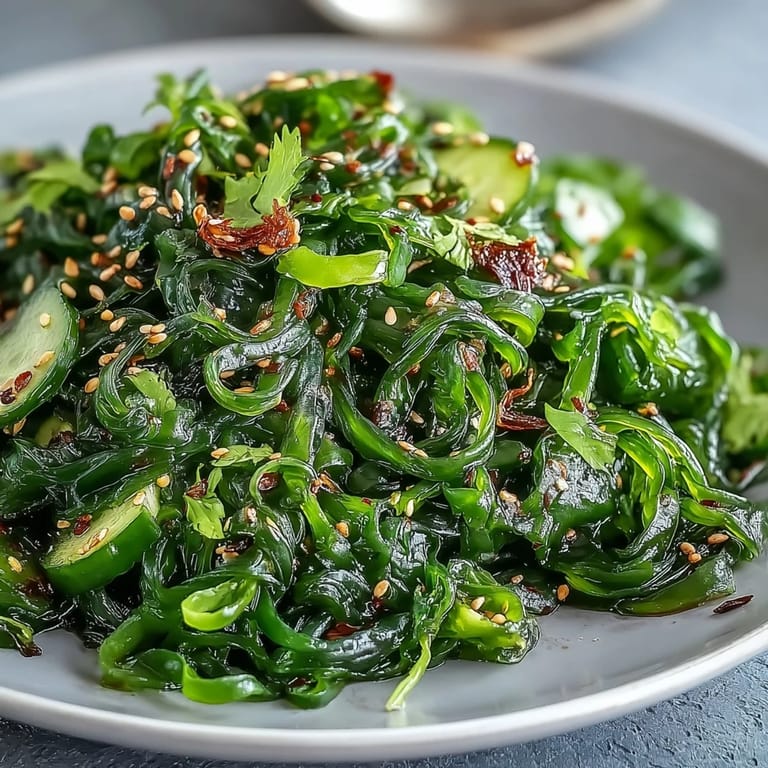
 This salad has become my quiet confidence builder in the kitchen, the dish I make when I want to cook something that feels both nutritious and indulgent without any fuss or stress. It reminds me that the best food doesn't require elaborate technique, just good ingredients and the willingness to taste and adjust as you go.
Recipe Questions & Answers
- → How do I prepare dried seaweed for salad?
Place dried wakame in a bowl and cover with cold water. Soak for 7–10 minutes until fully rehydrated and tender. Drain thoroughly and squeeze out excess water before combining with other ingredients.
- → Can I make this seaweed salad ahead of time?
Yes, this salad actually improves after chilling for 15–30 minutes, allowing flavors to meld. Store leftovers in an airtight container in the refrigerator for up to 2 days.
- → Is seaweed salad gluten-free?
The salad can be gluten-free when using tamari instead of regular soy sauce. Always check packaged seaweed labels for possible cross-contamination and ingredient lists.
- → What vegetables work well in seaweed salad?
Cucumber and carrot provide classic crunch and color. For additional texture, try adding thinly sliced radish or shredded red cabbage for extra variation.
- → How do I adjust the dressing flavor?
Taste the dressing before tossing and adjust the maple syrup for sweetness or rice vinegar for acidity. The chili flakes add optional heat for those who enjoy a spicy kick.
- → What beverages pair well with seaweed salad?
Chilled sake or green tea complement the fresh, oceanic flavors beautifully. The light, refreshing nature of the dish makes it ideal alongside Japanese-inspired meals.