 Pin It
 My first encounter with wakame soup happened in a small Tokyo kitchen on a gray November morning, where my friend's mother stirred a pot with the kind of quiet efficiency that comes from making the same soup a thousand times. The broth smelled like the ocean and earth combined, and when she added the wakame, it seemed to bloom back to life, unfurling into tender ribbons. I've been chasing that exact moment of simplicity ever since, realizing that the best soups aren't complicated, they're just honest.
Years later, I made this for a friend who'd just moved to a new city and was feeling homesick, standing in my kitchen at midnight with nothing but this soup and some decent tea to offer. She had thirds, and afterwards told me it tasted like something her grandmother used to make, even though she'd never had it before. Sometimes food carries a kind of memory that isn't yours but somehow becomes shared.
Ingredients
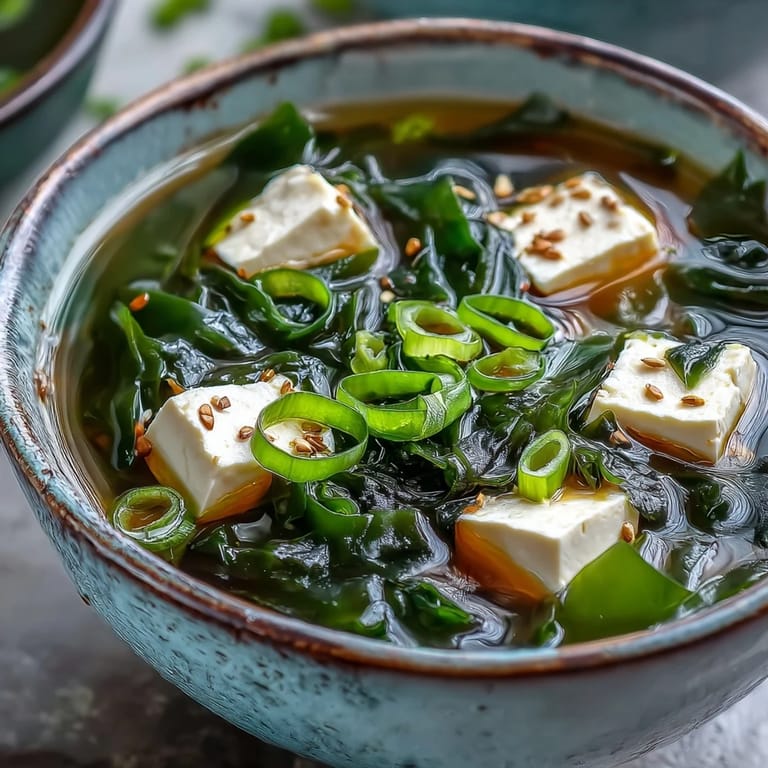
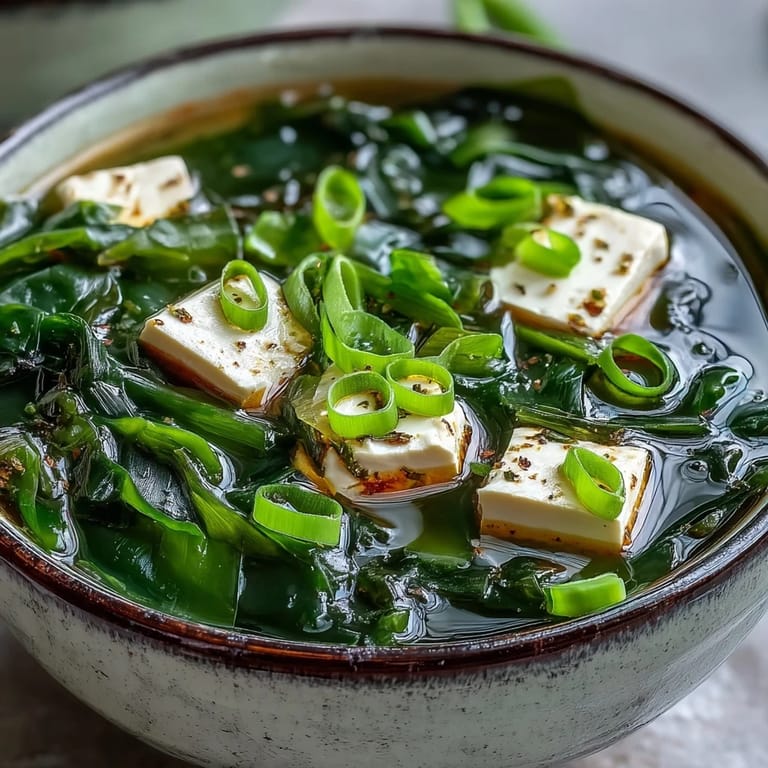
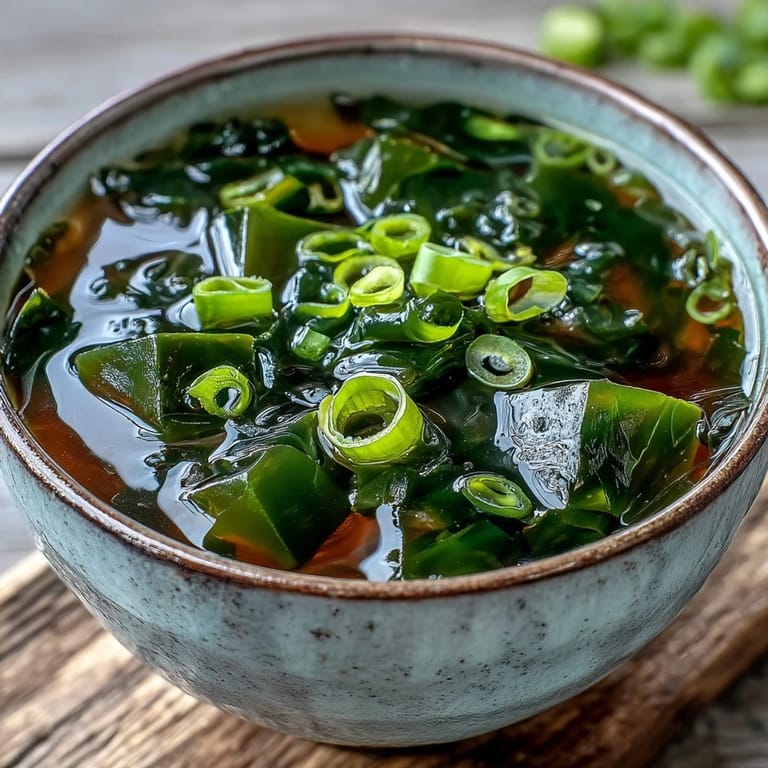
- Dried wakame seaweed (8 g): This delicate seaweed rehydrates beautifully and brings mineral richness that regular vegetables can't match. Don't skip the soaking step, it makes all the difference in texture.
- Dashi stock (4 cups): The foundation of everything, this gentle broth should taste faintly of the sea and kombu sweetness. Make it fresh if you can, but quality instant dashi works wonderfully too.
- Silken or firm tofu (100 g, cubed): Silken gives you a creamy dissolve, firm keeps cleaner pieces. Choose based on your mood and what feels right that day.
- Scallions (2, thinly sliced): These add a fresh bite at the very end, a bright note against the deep umami of everything else.
- White miso paste (2 tbsp): This is where the soul lives, so use decent miso. The white variety keeps the broth light and adds a subtle sweetness.
- Soy sauce (1 tsp): Just a whisper of salt and depth, not enough to make you taste soy, but enough to remind you it's there.
- Sesame oil (1 tsp, optional): A finishing touch that adds warmth and a hint of nuttiness if you decide to use it.
Tired of Takeout? 🥡
Get 10 meals you can make faster than delivery arrives. Seriously.
One email. No spam. Unsubscribe anytime.
Instructions
- Awaken the wakame:
- Place your dried wakame in a small bowl and cover it with cold water. In five minutes you'll watch it transform from brittle ribbons into tender, almost delicate strands. This rehydration is where the magic starts.
- Prepare your broth:
- Pour your dashi into a medium saucepan and bring it to a gentle, barely-there simmer. You want the surface just barely moving, not a rolling boil that'll assault the delicate flavors.
- Combine and warm:
- Drain your wakame and add it to the broth along with your cubed tofu. Let everything simmer together for two to three minutes, just long enough for the flavors to meet and become friends.
- Miso magic:
- This step matters. Scoop a ladle of hot broth into a separate bowl and stir your miso paste into it until completely smooth and creamy. This prevents lumps and keeps the paste's beneficial enzymes from being destroyed by aggressive heat. Pour this mixture back into the pot and stir gently.
- Season and finish:
- Add your soy sauce and sesame oil if using, stirring everything together with care. Heat for one more minute but don't let it boil, which would damage the miso's delicate qualities.
- Serve and scatter:
- Pour into bowls while the soup is still steaming and top each one with your sliced scallions. The heat will barely cook them, keeping them crisp and fresh against the warm bowl.
 Pin It
 There was a Tuesday evening when I made this soup and my neighbor stopped by just as I was serving it, drawn by the smell through our shared wall. She sat at my counter for an hour, telling me stories between sips, and I realized that a bowl of simple, honest soup can be an invitation to slow down together. That's when this recipe stopped being a recipe and became something I make when I want to give someone a quiet moment of care.
The Alchemy of Simple Broths
What strikes me about wakame soup is how it proves you don't need pages of ingredients or complicated techniques to create something genuinely nourishing. The broth does almost all the work, carrying flavors with a kind of grace that busier soups never achieve. I've learned that in cooking, simplicity isn't a limitation, it's an art form.
Wakame and Your Wellness
Beyond taste, there's something deeply grounding about eating something made with seaweed and minerals pulled from the ocean. Japanese grandmothers have known this for centuries, and modern nutrition is just now catching up to what they understood intuitively. This soup carries that ancient wisdom in every spoonful.
Variations and Seasons
While the traditional version is perfect as-is, I've found myself experimenting with additions based on what I have and what the season feels like. In colder months, mushrooms add earthiness. In spring, tender spinach wilts beautifully into the broth. The foundation stays true, but the soup becomes a conversation with your garden and your mood.
- Try adding fresh shiitake mushrooms or delicate enoki for a deeper umami note.
- A handful of fresh spinach or mizuna added at the end brings brightness without weight.
- If you want more substance, add cooked rice or thin noodles to make it a complete meal.
 Pin It
 This soup has become my go-to reminder that the most memorable meals aren't always the most elaborate ones. A warm bowl and someone to share it with is sometimes exactly what the evening asks for.
Recipe Questions & Answers
- → What does wakame seaweed taste like?
Wakame has a mild, slightly sweet ocean flavor with a tender texture once rehydrated. It's less briny than other seaweeds and absorbs the flavors of the broth beautifully.
- → Can I make this without dashi stock?
While dashi provides the authentic flavor, you can substitute with vegetable broth or water. The miso paste will still add plenty of umami, though the traditional depth will be subtler.
- → Why shouldn't I boil the miso?
Boiling miso paste destroys its beneficial enzymes and can make the flavor bitter. Always dissolve it in a separate ladle of hot broth first, then stir it into the soup after removing from direct heat.
- → How do I store leftovers?
Store in an airtight container in the refrigerator for up to 2 days. Reheat gently over low heat—avoid boiling to preserve the miso's qualities. The tofu and seaweed may soften slightly.
- → Is this suitable for meal prep?
Yes, but for best results, prepare the broth and tofu ahead, then add the miso just before serving. You can also pre-soak the wakame and keep it refrigerated in water for a couple days.