 Pin It
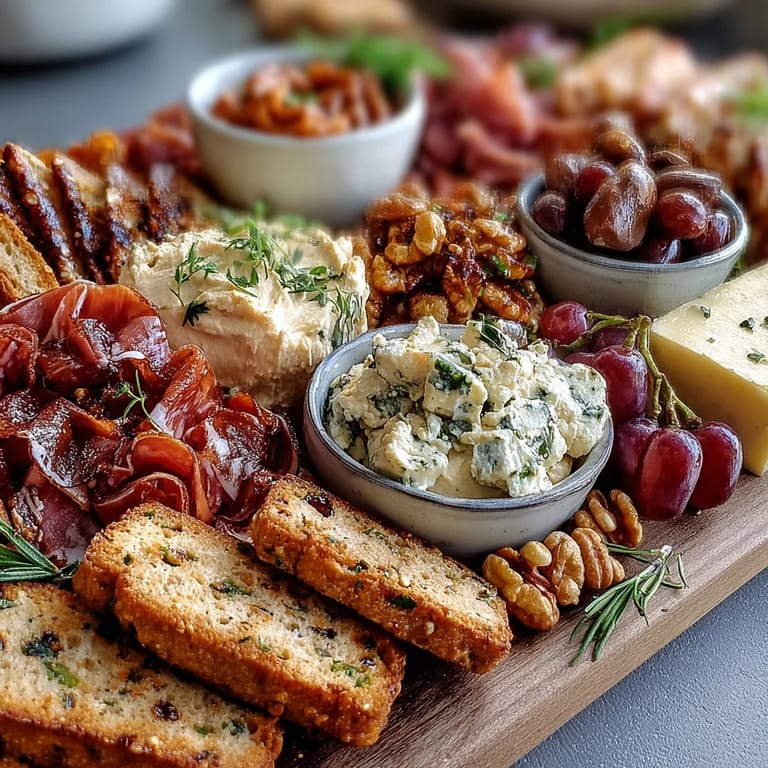
 My neighbor texted me a photo of her new kitchen—the one with the marble counters and the window that catches afternoon light just right—and asked if I'd help her celebrate moving in. I knew exactly what to bring: a charcuterie board so generous and thoughtfully arranged that it would do the talking while we stood around catching up. There's something about the simplicity of it that feels like a gift, a way of saying welcome home without making a fuss in someone else's kitchen.
I watched my friend's eyes light up when she saw the board set out on her new dining table—not because of what was on it, but because it meant people were staying, lingering, trying things they might not have ordered at a restaurant. Someone reached for the prosciutto and the gouda together, and someone else discovered they actually liked olives. Those small moments of discovery around food are what make a space feel lived in.
Ingredients
- Prosciutto (120 g): Let it come to room temperature for the best flavor, and resist the urge to arrange it too neatly—those loose, rumpled folds look more inviting.
- Salami (120 g): Choose a variety with good marbling and slice it yourself if possible; the texture matters more than you'd think.
- Smoked ham (120 g): This bridges the gap between adventurous and familiar, keeping everyone comfortable.
- Chorizo slices (100 g): The paprika adds color and a hint of spice that draws people back for more.
- Brie (150 g sliced): Leave it out for 30 minutes before serving so it's soft enough to actually enjoy, not rubbery.
- Aged cheddar (150 g cubed): The sharpness plays beautifully against sweet grapes and dried fruit.
- Gouda (120 g sliced): Its creamy sweetness is a crowd-pleaser that surprises people who think they don't like cheese.
- Blue cheese (100 g crumbled): Crumble it fresh just before serving so it doesn't dry out, and don't apologize for its boldness.
- Hummus (100 g): Buy quality or make it yourself; the difference shows.
- Tzatziki (100 g): It's cooling and refreshing, the ingredient people reach for when they've had something rich.
- Roasted red pepper dip (100 g): This one has a hint of sweetness that makes it approachable for people who are dip-shy.
- Assorted crackers (150 g): Mix textures—some sturdy for thick dips, some delicate for the soft cheeses.
- Baguette slices (100 g): Toast them lightly if you're making the board more than an hour ahead; it keeps them crisp.
- Breadsticks (100 g): They're more decorative than practical, but they do fill in odd corners beautifully.
- Red and green grapes (2 cups total): They act as flavor reset buttons and add jewel-like color.
- Cherry tomatoes (1 cup): Choose small, sweet ones and halve them if they're too large to pop in your mouth.
- Cucumber slices (1 cup): Cut them fresh just before serving so they stay crisp and cool.
- Red bell pepper (1): The sweetness balances the salty meats and bold cheeses.
- Baby carrots (1 cup): They're more practical than you'd think, especially for people wanting something light.
- Mixed nuts (½ cup): Toast them lightly with a pinch of salt to wake up their flavor.
- Olives (½ cup pitted): Use both green and black for visual contrast and different flavor profiles.
- Dried apricots (¼ cup): Their chewiness and slight tartness add complexity.
- Dried figs (¼ cup): Figs with blue cheese is a pairing that converts skeptics instantly.
- Fresh herbs (rosemary, thyme): A small bunch scattered across the board turns it from nice to restaurant-quality.
Tired of Takeout? 🥡
Get 10 meals you can make faster than delivery arrives. Seriously.
One email. No spam. Unsubscribe anytime.
Instructions
- Start with the foundation:
- Use a large wooden board or ceramic platter—something with real presence. The board itself is part of the design, so choose one you're proud of.
- Arrange the cured meats:
- Fold the prosciutto and ham loosely so they catch light and look generous, then scatter salami and chorizo slices around them. Aim for pockets of color rather than perfect symmetry.
- Position the cheeses strategically:
- Place each cheese type in a different zone, spacing them so people don't have to reach across the whole board. Soft cheeses like brie benefit from being positioned where they'll stay a bit cooler.
- Nestle the dips:
- Spoon each dip into its own small bowl and tuck them into gaps between meats and cheeses. Three dips is the sweet spot—more and it feels cluttered.
- Create cracker patterns:
- Fan out different cracker types in sections, and lean baguette slices and breadsticks at angles so they look purposeful. Leave small gaps; a board that looks full is less inviting than one with breathing room.
- Fill with fruits and vegetables:
- Distribute grapes in small clusters throughout, then tuck in cherry tomatoes, cucumber, bell pepper, and carrots in pockets where there's still space. These add freshness and make the board feel balanced.
- Scatter nuts and dried fruit:
- Drop mixed nuts, olives, apricots, and figs in small clusters across the board, treating them like visual punctuation. They're the details that make people say how thoughtfully it was put together.
- Finish with herbs:
- Pull apart sprigs of rosemary and thyme and tuck them between items, letting them poke out naturally. This step takes two minutes but makes everything look intentional and beautiful.
- Serve and replenish:
- Put it out and let people explore at their own pace, refilling dips and nuts as they empty. The board is meant to evolve as people eat, not sit untouched like a museum piece.
 Pin It
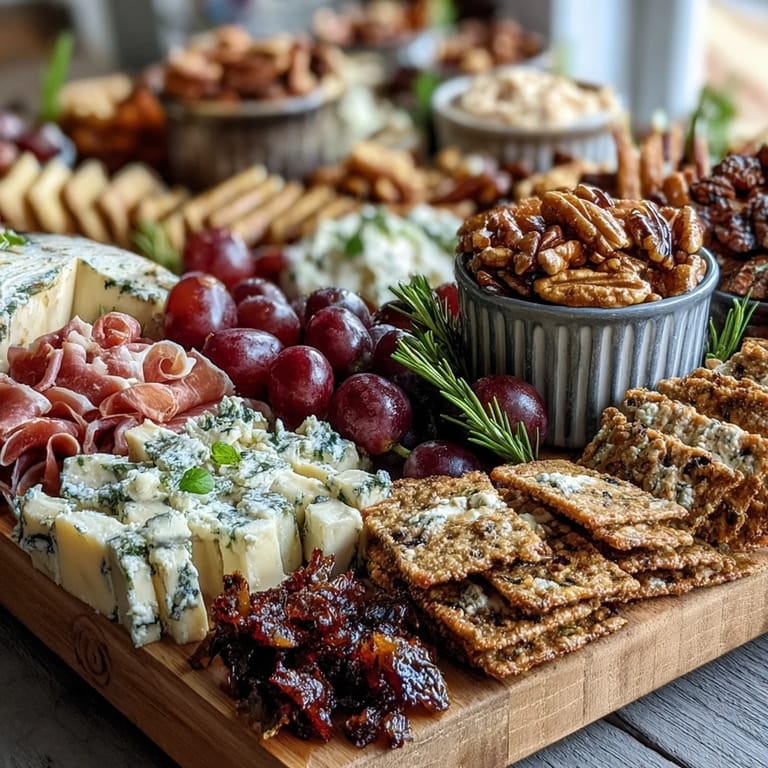
 At my friend's housewarming, I noticed something small but telling: people stood around the board for nearly an hour, not because they were hungry, but because it gave them permission to slow down and talk. There's something about charcuterie boards that feels less formal than a sit-down meal but more intentional than chips and dip. They're an invitation to linger.
The Art of Balance
A good charcuterie board is about contrasts—salty meats next to sweet fruit, soft cheese against crisp crackers, bold flavors balanced by fresh vegetables. Think of it less like a recipe and more like a conversation where every ingredient has something to say. The key is making sure nothing overpowers everything else, so people can taste each element on its own terms and find their own favorite combinations.
Pairing and Serving Wisdom
I learned early on that the board itself is just the opening act. A crisp white wine or light rosé transforms everything, making flavors brighter and making people more relaxed. Consider the time of day too—a morning board looks different from an evening one, and that's not just about presentation. It's about setting a mood.
Building Your Own Style
Over time, you'll develop instincts about what belongs on your boards. Maybe you love adding a small honeycomb with the cheeses, or maybe you prefer the clarity of sticking to just what people expect. The best boards reflect the person making them, not some generic Pinterest ideal. Don't be afraid to swap out ingredients based on what you love or what's in season.
- Trust seasonal produce and cheese shops over supermarket defaults—the difference in quality will be noticed even by people who don't know much about food.
- Keep ingredient ratios loose; there's no such thing as a perfectly balanced board, just one that works for the people eating it.
- Remember that the board is always better when it's been made with genuine care and thought, not stress about getting every detail right.
 Pin It
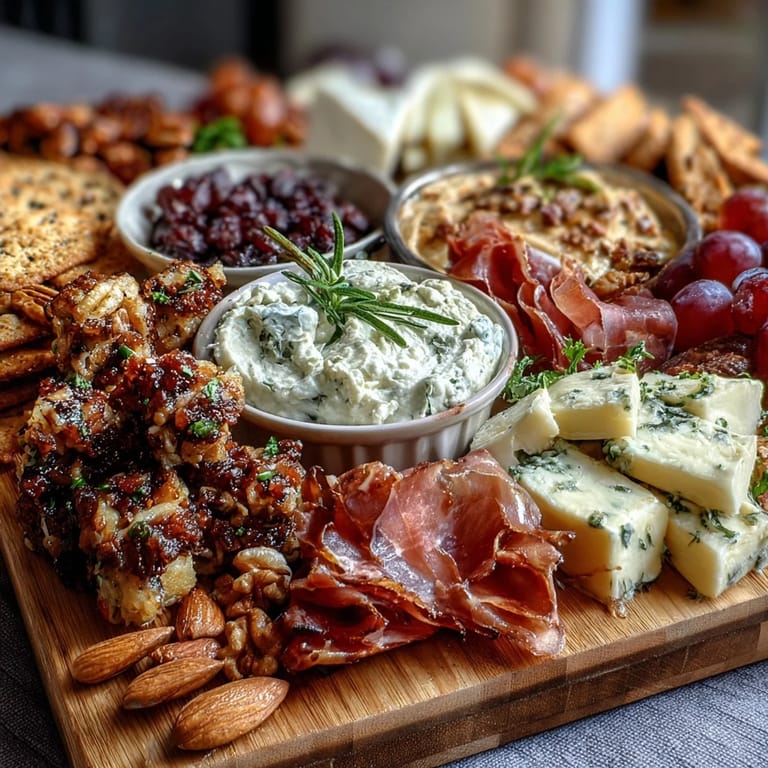
 This board isn't about impressing anyone with technical skill or rare ingredients. It's about creating a moment where people feel welcome, seen, and given permission to enjoy themselves without ceremony. That's what makes it perfect for any celebration, especially a new home.
Recipe Questions & Answers
- → What meats work best on a charcuterie board?
Cured selections like prosciutto, salami, smoked ham, and chorizo provide a flavorful, varied meat choice that pairs well with cheeses and dips.
- → How should cheeses be arranged for serving?
Slice and cube cheeses like brie, cheddar, gouda, and blue cheese, spacing them evenly for easy access and aesthetic appeal.
- → Which dips complement a charcuterie board?
Hummus, tzatziki, and roasted red pepper dip offer diverse flavors that balance the richness of meats and cheeses.
- → What fresh produce enhances the board?
Incorporate items like grapes, cherry tomatoes, cucumber slices, bell pepper, and baby carrots to add freshness and color contrast.
- → How can I cater to dietary restrictions on the board?
Offer vegetarian-friendly cheeses and dips, provide gluten-free crackers, and consider substituting meats to accommodate preferences.
- → What are good garnish choices?
Fresh herbs such as rosemary and thyme add aroma and a visually appealing finish to the board.