 Pin It
 There's something almost meditative about splitting open an acorn squash and watching that deep orange flesh catch the light. One October afternoon, I roasted a batch while rain drummed against the kitchen window, and the smell that filled my apartment was so comforting I nearly forgot to blend them into soup. That's when this recipe became a ritual instead of just dinner.
I made this for my sister during her first visit to my new place, and watching her close her eyes after the first sip told me everything I needed to know. She asked for the recipe before she'd even finished the bowl, which never happens with her.
Ingredients
- Acorn squash: Two medium ones are the star here, and roasting them beforehand caramelizes their natural sugars instead of boiling them into oblivion.
- Yellow onion and carrot: These build a gentle aromatic base that won't overpower the delicate squash flavor.
- Garlic: Just two cloves keep things subtle; more will bully the whole soup.
- Vegetable broth: Use something you'd actually taste on its own, because it becomes the backbone of every spoonful.
- Heavy cream or coconut milk: Adds richness and a silky finish without needing butter or extra fats.
- Nutmeg and cinnamon: These warm spices whisper rather than shout, so measure carefully and taste as you go.
- Olive oil: For brushing the squash and sautéing, it keeps the soup clean and lets other flavors shine.
Tired of Takeout? 🥡
Get 10 meals you can make faster than delivery arrives. Seriously.
One email. No spam. Unsubscribe anytime.
Instructions
- Get your oven ready and prep the squash:
- Heat the oven to 400°F and line a baking sheet with parchment. Brush the cut sides of your halved acorn squash with a tablespoon of olive oil, then place them cut side down on the sheet like they're settling in for a nap.
- Roast until golden and tender:
- Let them roast for 30 to 35 minutes until a fork slides through the flesh easily. The kitchen will smell incredible, and you'll know they're done when the flesh starts pulling slightly away from the skin.
- Cool and scoop out the flesh:
- Give them a few minutes to cool just enough to handle, then scoop the soft flesh away from the skin with a spoon. You'll feel how willingly it comes away when it's properly roasted.
- Sauté your aromatic vegetables:
- In a large pot over medium heat, warm the remaining olive oil and add your chopped onion, carrot, and minced garlic. Let them soften for about 5 to 7 minutes, stirring occasionally until they smell sweet and start to turn golden at the edges.
- Combine everything and simmer:
- Add the roasted squash flesh to the pot along with the vegetable broth, water, salt, pepper, nutmeg, and cinnamon. Bring it to a boil, then lower the heat and let it simmer gently for 10 minutes so all the flavors get acquainted.
- Blend until silky smooth:
- Remove from heat and use an immersion blender to puree everything into a velvety consistency. If you're using a countertop blender instead, work in batches and never fill it more than halfway.
- Finish with cream and season:
- Stir in your cream or coconut milk and taste carefully, adjusting salt and spices until it feels right to you. Reheat gently if needed, but don't let it boil once the cream is in.
- Serve with intention:
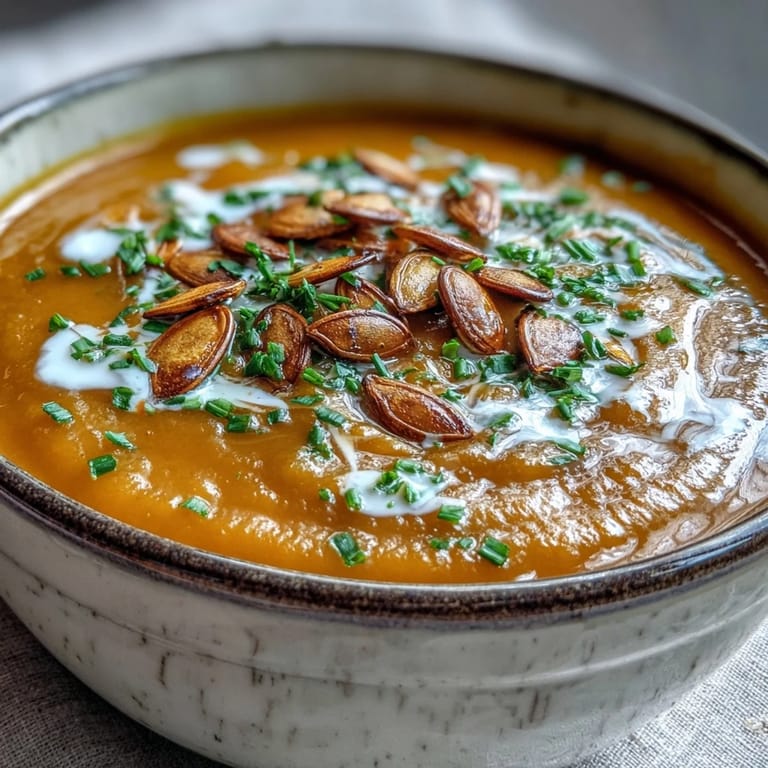
- Ladle into bowls and top with toasted pumpkin seeds, fresh chives, and a drizzle of cream if you're feeling indulgent. The garnishes aren't decoration, they're texture and brightness against that silky soup.
 Pin It
 My neighbor smelled this cooking one evening and appeared at my door with her kids, asking if we had enough to share. We fed four extra people that night with one pot of soup and some bread, and somehow that spontaneous dinner felt like the whole point of learning to cook in the first place.
Why Roasting Makes All the Difference
Roasting concentrates the natural sugars in the squash instead of leaching them into cooking liquid. It sounds technical, but what it really means is the soup actually tastes like squash and autumn, not like a bland orange liquid. When you cut open a roasted squash, it should feel soft enough to scoop effortlessly, almost like it's eager to become soup.
The Spice Balance That Works
Nutmeg and cinnamon can easily overpower delicate squash, so I learned to add them to the broth before blending, tasting as I went. Starting with a quarter teaspoon of each feels conservative until you remember that you can always add more, but you can't take it out. A pinch of cayenne is lovely if you want heat without announcing itself.
Making It Your Own
This soup is flexible enough to bend to what you have on hand and what your mood demands. Butternut squash works beautifully if acorn isn't available, and some evenings I've added a splash of apple cider or a swirl of sage brown butter. The soup stayed the same and completely transformed at once.
- A handful of crispy sage leaves scattered on top brings an earthy note that makes people ask what that flavor is.
- Roasted garlic cloves stirred in at the end add sweetness and richness without any sharpness.
- A drizzle of truffle oil or good quality olive oil elevates it into something that feels special enough for company.
 Pin It
 This soup feels like proof that the simplest ingredients, treated with a little attention and patience, become something that nourishes more than just your body. Make it once and you'll understand why it keeps appearing on my table every October.
Recipe Questions & Answers
- → Can I make this soup ahead of time?
Yes, this soup stores beautifully in the refrigerator for up to 4 days. Reheat gently on the stovetop, adding a splash of broth if needed to adjust consistency. You can also freeze it for up to 3 months in airtight containers.
- → What can I substitute for acorn squash?
Butternut squash works wonderfully as a substitute and provides a similar sweet, nutty flavor. You can also use kabocha or delicata squash. Cooking times may vary slightly depending on the squash variety.
- → How do I make this soup vegan?
Simply replace the heavy cream with full-fat coconut milk or cashew cream. The coconut milk adds a subtle tropical note while maintaining the soup's creamy texture without any dairy.
- → Can I skip roasting the squash?
While roasting enhances the natural sweetness and adds depth of flavor, you can peel and cube the squash, then simmer it directly in the broth. This saves time but results in a slightly less complex flavor profile.
- → What causes the soup to be too thick or too thin?
The squash's water content varies by size and variety. If too thick, thin with additional vegetable broth or water. If too thin, simmer uncovered for 10-15 minutes to reduce, or add more roasted squash flesh.
- → What garnishes work best with this soup?
Toasted pumpkin seeds add crunch, while fresh chives provide a mild onion flavor. Other excellent options include crispy sage leaves, a swirl of cream, crumbled bacon for non-vegetarians, or a drizzle of maple syrup.