 Pin It
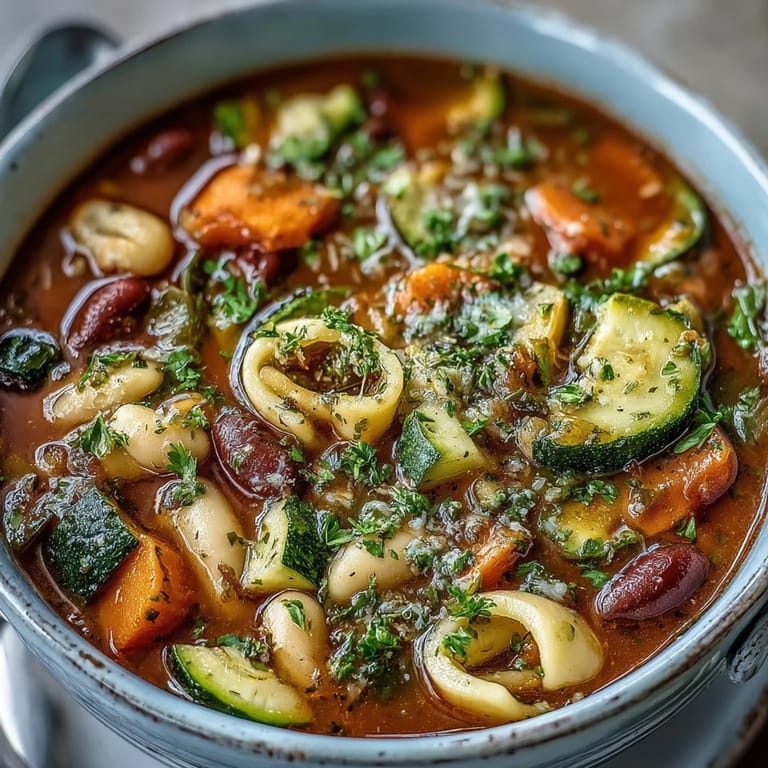
 There's something about the smell of soffritto hitting hot olive oil that tells you a soup is about to become something special. I discovered minestrone not through a cookbook, but through a friend's grandmother in a cramped Milan kitchen, where she moved through her vegetable prep with the ease of someone who'd fed the same soup to three generations. She taught me that minestrone isn't one recipe—it's a framework, a way of listening to what the market has that day and turning it into something warm and alive in a bowl. Every version tells a story about the season, the cook, and whoever's sitting at the table waiting to eat it.
I made this soup on a wet November afternoon when my partner came home sick and miserable, and I watched them eat three bowls without saying much of anything. By the fourth spoonful, their shoulders dropped away from their ears, and that's when I understood why people have been making minestrone for centuries—it's not fancy, but it fixes something in you that food usually can't touch.
Ingredients
- Olive oil (2 tbsp): The foundation of flavor—use good oil here because it's doing real work, not just cooking equipment.
- Onion, carrots, celery (1 medium, 2 each, 2 stalks): This holy trinity is called soffritto in Italian kitchens, and it's where minestrone's soul lives; don't rush the five minutes it takes to soften these.
- Zucchini or butternut squash (1 small, diced): Summer wants zucchini; winter demands squash—let the season choose for you.
- Green beans or kale (1 cup): Green beans keep their snap in summer versions, while kale mellows into the broth come winter.
- Garlic (3 cloves, minced): Add it after the soffritto or it'll burn and taste bitter—a lesson learned the hard way in my third batch.
- Diced tomatoes (1 can, 400 g): Canned tomatoes are your friend here because they release their juice slowly and evenly, no fresh tomato drama required.
- Potato (1 medium, optional): It adds substance and a gentle starch that makes the broth silkier without cream.
- Vegetable broth (1.5 liters): Use something you'd actually drink on its own—bad broth makes bad soup every time.
- Cannellini or borlotti beans (1 can, 400 g): Rinse them even though the label says you don't have to; it removes the slime and makes the soup cleaner tasting.
- Pasta (100 g, small shapes): Ditalini or elbow pasta stays suspended in the broth and catches flavor in its curves.
- Bay leaf, dried oregano, dried basil (1 leaf, 1 tsp each): These are the backbone of Italian seasoning; dried herbs work better here than fresh because they need time to unfurl.
- Fresh parsley (2 tbsp, plus more for serving): Stir it in at the end so it stays bright and alive instead of cooking into an invisible green memory.
- Parmesan cheese (for serving, optional): A small pile of grated cheese on top transforms the whole bowl, vegan or not.
Tired of Takeout? 🥡
Get 10 meals you can make faster than delivery arrives. Seriously.
One email. No spam. Unsubscribe anytime.
Instructions
- Build the foundation:
- Heat olive oil in a large pot over medium heat and add your onion, carrots, and celery all at once. The pot will sizzle and smell immediately like cooking, and after about five minutes when the vegetables start to soften and turn translucent at the edges, you'll know you're on the right track.
- Wake up the garlic:
- Stir in minced garlic along with your zucchini or squash and green beans or kale, giving everything a quick minute or two to get to know the hot oil. The garlic will perfume the whole pot, and your kitchen will smell like someone who knows what they're doing.
- Bring in the tomatoes:
- Add your canned tomatoes and potato if you're using one, let it all sit for a moment, then pour in the vegetable broth. The liquid will rise and cover everything like a blanket, and you'll know immediately whether your pot is big enough or if you're about to have a tiny situation on your stovetop.
- Let it simmer:
- Bring the whole thing to a boil, then lower the heat and let it bubble gently for fifteen minutes—not a rolling boil, just a quiet conversation between ingredients. The vegetables will soften completely, and the flavors will begin to blend together into something more cohesive than their individual parts.
- Add the final players:
- Stir in your beans and pasta, and let them simmer together for ten to twelve minutes until the pasta has softened but still has a tiny bit of resistance when you bite it. This is when the soup thickens slightly and becomes creamy from the starch without any cream involved.
- Season and finish:
- Remove the bay leaf, add oregano and basil, taste for salt and pepper, then stir in your fresh parsley at the very last moment. Ladle into bowls and top with Parmesan if you're having it—sometimes the simplest addition is the one that makes you close your eyes.
 Pin It
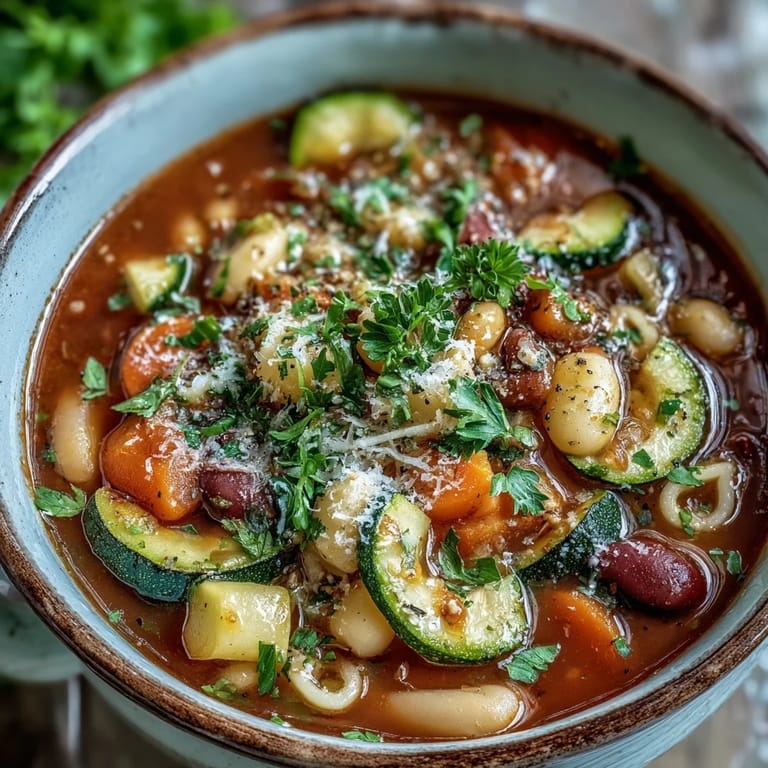
 I've served this soup to people who said they didn't eat beans and watched them ask for seconds, people who were too tired to cook for themselves and suddenly had something warm in front of them that tasted like someone cared. Minestrone does that—it transcends the ingredients list and becomes an act of feeding, of saying without words that nourishment matters.
Adapting to the Season
The magic of minestrone is that it changes with you throughout the year. Spring asks for peas, tender leeks, and maybe some fresh herbs that you can barely see in the final bowl; summer wants zucchini, fresh basil, and green beans that still have a snap to them. Fall brings mushrooms and diced squash that turns sweet and creamy as it cooks, while winter is all dark leafy greens, root vegetables, and the kind of warming that makes you want to wrap both hands around your bowl. The structure stays the same, but the personality shifts entirely.
Making It Your Own
I've learned that the best minestrone recipes are the ones that get argued about in families, where one person swears by adding the tomatoes earlier and another insists on holding them back until the end. There's no wrong answer here, only preferences built from repetition and taste memory. If you find yourself adding a pinch of red pepper flakes or a teaspoon of balsamic vinegar, that's not straying from the recipe—that's you becoming the expert in your own kitchen.
Serving and Storing
This soup is even better the next day when the flavors have had time to fully merge, and it keeps in the fridge for about four days in a sealed container. If you're planning to reheat it, add the pasta fresh or it'll absorb too much liquid and disintegrate—some cooks keep the pasta separate specifically for this reason. Serve it with crusty bread and a drizzle of excellent olive oil, maybe a small handful of fresh parsley, and if you're feeling generous, a small pile of grated Parmesan that people can add as much or as little of as they want.
- Freeze the soup without the pasta and add fresh pasta when you reheat it for the best texture.
- A hunk of Parmesan rind simmering in the pot adds richness that tastes like you spent all day cooking.
- Let people customize their own bowls with cheese, herbs, and oil instead of deciding for them.
 Pin It
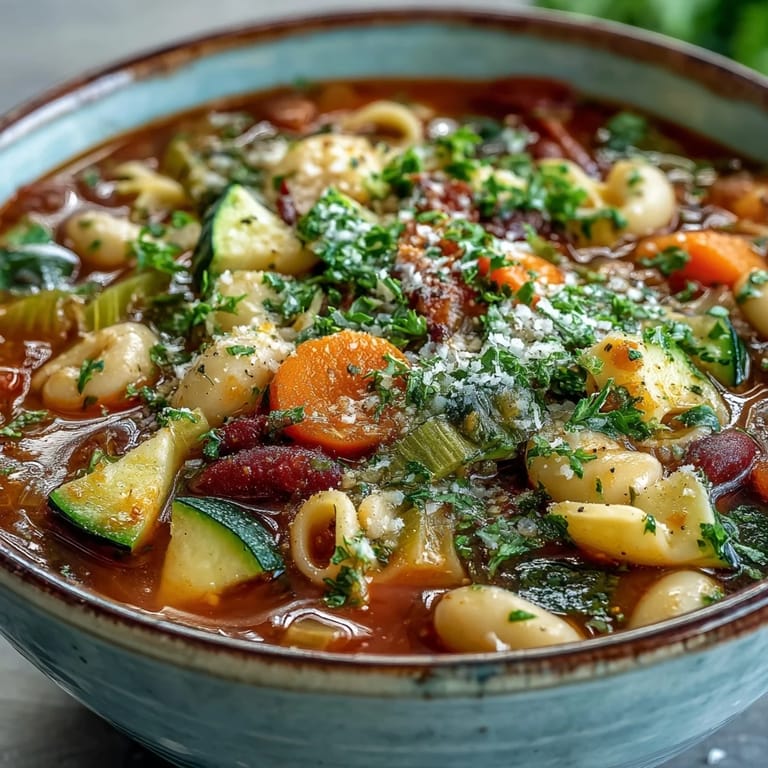
 Minestrone is the kind of soup that teaches you to stop searching for perfection and start appreciating the ordinary act of turning vegetables into comfort. Every bowl tells you something about who made it and when.
Recipe Questions & Answers
- → Can I make this soup ahead of time?
Yes, prepare the soup up to 3 days in advance. Store in an airtight container in the refrigerator. Note that pasta will absorb liquid over time, so you may need to add extra broth when reheating.
- → What vegetables work best in different seasons?
In summer, use zucchini, green beans, and fresh tomatoes. For winter, swap in butternut squash, kale, savoy cabbage, and root vegetables. Spring variations can include peas, leeks, and asparagus.
- → How can I make this soup more filling?
Add extra beans, increase the pasta amount, or include diced potatoes. You can also stir in a handful of spinach or kale at the end for added nutrition and substance.
- → What's the best pasta shape for minestrone?
Small pasta shapes like ditalini, elbow macaroni, or small shells work best as they're easy to eat with a spoon. Avoid long pasta like spaghetti, which can be difficult to manage in soup.
- → Can I freeze leftover minestrone?
Yes, but it's best to freeze the soup before adding pasta. Cook pasta fresh when reheating for better texture. Freeze in portions for up to 3 months in freezer-safe containers.
- → How do I add more depth of flavor?
Add a Parmesan rind while simmering, use homemade vegetable stock, or sauté a tablespoon of tomato paste with the vegetables. A splash of red wine with the tomatoes also enriches the flavor profile.