 Pin It
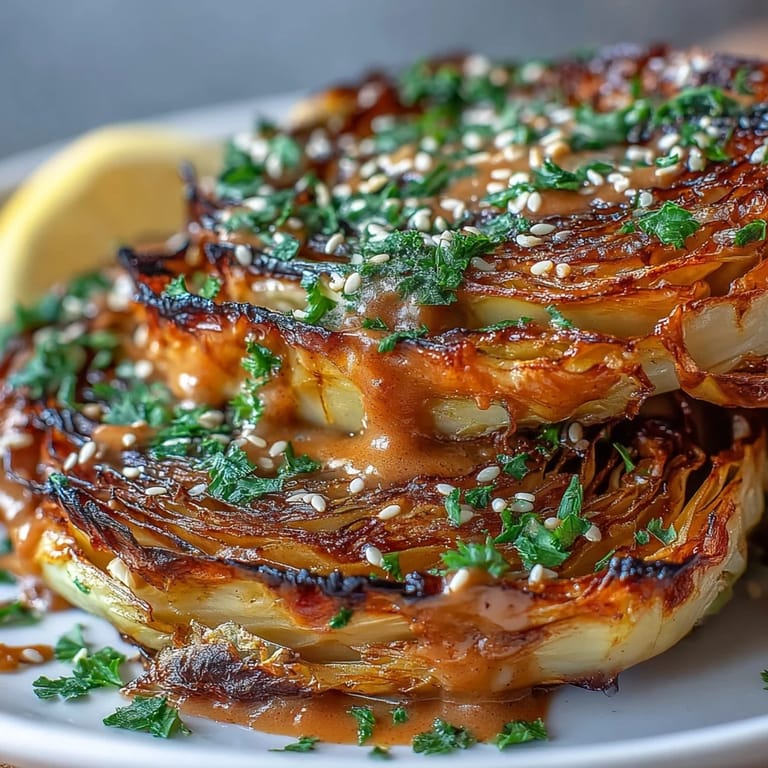
 My sister brought home a massive head of cabbage from the farmers market last fall, and I stood there wondering how on earth to make it exciting. That's when I sliced it thick, threw it in the oven, and watched those pale green rounds transform into golden, caramelized steaks with crispy edges. The tahini drizzle came later, born from a half-remembered conversation about Middle Eastern flavors, and suddenly this humble vegetable felt like something you'd order at a restaurant.
I made this for a dinner party where one friend had just gone plant-based, and I watched their face light up when they realized the main course wasn't some bland virtue-signaling side dish. They asked for the recipe immediately, and now it shows up at their family dinners too. That moment made me realize roasted cabbage steaks aren't a compromise—they're the real deal.
Ingredients
- 1 large green cabbage: Look for one that feels heavy and dense, a sign it's fresh and tightly packed with layers that will caramelize beautifully.
- 3 tbsp olive oil: Use a good quality extra virgin oil since it's essential for the golden crust and won't burn at this temperature.
- 1 tsp ground cumin: This warm spice is the backbone of the flavor profile, giving earthiness to the mild cabbage.
- 1 tsp smoked paprika: It adds depth and a whisper of smokiness that tricks your brain into thinking there's more complexity happening.
- ½ tsp garlic powder: A little goes a long way here; it enhances without overpowering the natural sweetness of roasted cabbage.
- Salt and freshly ground black pepper: Season generously—the cabbage itself is mild and needs encouragement to shine.
- ⅓ cup tahini: Use a well-stirred jar from the top, not the settled oil, for a creamier starting point.
- 2 tbsp freshly squeezed lemon juice: Fresh is non-negotiable; bottled juice turns bitter when whisked into tahini.
- 1 small garlic clove, finely minced: Mince it nearly to a paste so it dissolves into the sauce rather than sitting in chunks.
- 2–4 tbsp cold water: Add it gradually and keep tasting; the drizzle should flow like silk but not taste watered down.
- 2 tbsp chopped fresh parsley: A bright finish that cuts through the richness and adds that fresh garden moment.
- 2 tbsp toasted sesame seeds (optional): They add a nutty crunch and look absolutely beautiful scattered on top.
- Lemon wedges: Serve them alongside so guests can squeeze extra brightness as they like.
Tired of Takeout? 🥡
Get 10 meals you can make faster than delivery arrives. Seriously.
One email. No spam. Unsubscribe anytime.
Instructions
- Set your oven and prep your stage:
- Preheat the oven to 425°F and line a baking sheet with parchment paper so nothing sticks and cleanup stays easy. Get your tools and ingredients ready before you start slicing, because once you begin, you'll want to keep moving.
- Slice the cabbage into steaks:
- Remove any bruised outer leaves, then using a sharp chef's knife, slice the cabbage into thick 1-inch rounds—you're aiming for 4 to 5 sturdy steaks that will hold their shape. The knife should glide through the layers; if it's stuck, try a rocking motion rather than forcing it down.
- Oil and season generously:
- Brush both sides of each steak with olive oil, then sprinkle on the cumin, smoked paprika, garlic powder, salt, and pepper like you're blessing them. Don't be shy with the seasoning—the cabbage is quiet and needs confident flavoring to come alive.
- Roast until golden and tender:
- Slide the baking sheet into the oven and roast for about 12 to 15 minutes before flipping each steak carefully with a spatula. Return them for another 12 to 15 minutes until the edges are deeply browned and caramelized, and you can pierce the center easily with a fork.
- Build the tahini sauce while the oven works:
- In a bowl, whisk together the tahini, fresh lemon juice, minced garlic, and a pinch of salt until well combined. Slowly add the cold water one tablespoon at a time, whisking steadily until the mixture becomes smooth, pourable, and pale—like silk.
- Plate and finish:
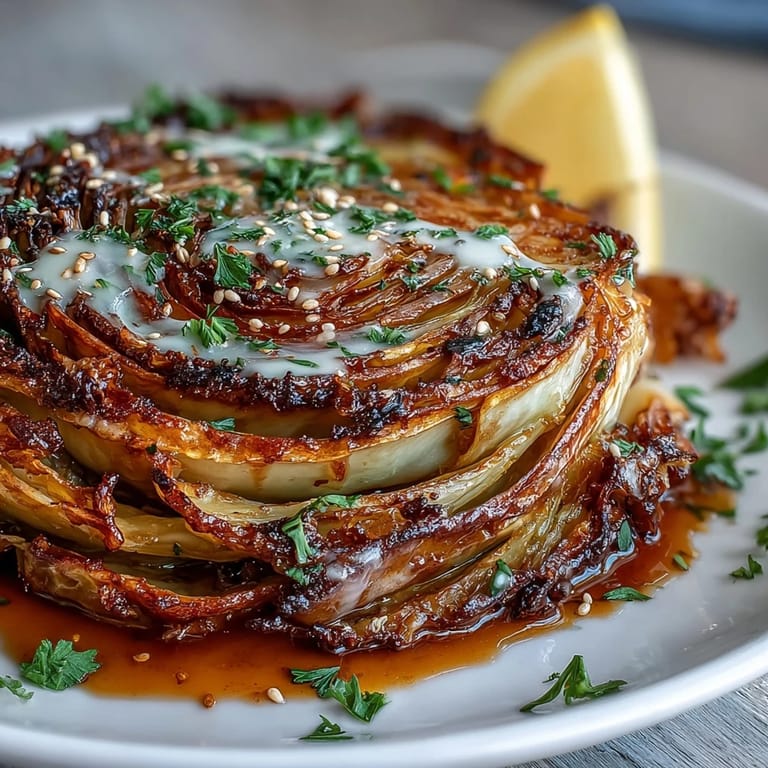
- Transfer the roasted cabbage steaks to a platter, then drizzle them generously with the tahini sauce, letting some pool around them. Top with chopped parsley, toasted sesame seeds if using, and serve with fresh lemon wedges on the side.
 Pin It
 There's something almost meditative about watching those pale cabbage slices slowly turn golden in the oven, the kitchen filling with a sweet, toasted aroma that doesn't announce itself loudly but lingers. When you drizzle that velvety tahini across the plate, you're not just finishing a dish—you're elevating something as humble as a vegetable into a moment worth savoring.
Why Roasting Changes Everything
Raw cabbage is crisp and sharp, but roasting unlocks a completely different personality—the layers soften, the edges crisp and caramelize, and the natural sugars concentrate into something almost nutty. I used to think cabbage was just for slaws until I discovered this transformation. The Maillard reaction isn't just chemistry; it's magic that happens when you give humble vegetables time and heat.
The Tahini Sauce is the Secret Weapon
This sauce is the difference between a pleasant vegetable side and something people genuinely crave. The lemon brightens it, the garlic gives it personality, and the cold water makes it impossibly creamy without any dairy at all. I've learned that the ratio of lemon to tahini matters—too little and it tastes flat, too much and it curdles—but once you find your balance, you'll want this sauce on everything from grain bowls to roasted vegetables.
Making This Work for Your Table
This dish lives in a happy middle ground where it works as a showstopping vegetarian main or a sophisticated side to grilled fish or chicken. The flavors are bold enough to stand alone but gentle enough to play well with almost any other dish you're serving. You can prep the cabbage steaks hours ahead, store them covered in the fridge, and roast them fresh when guests arrive—or make the tahini sauce ahead and just warm it gently before serving.
- For extra heat and depth, sprinkle a tiny pinch of chili flakes or zaatar over the cabbage before roasting.
- Swap the parsley for cilantro or mint if that feels more aligned with what you're craving.
- Serve warm or at room temperature—both versions are equally delicious and work beautifully for meal prep.
 Pin It
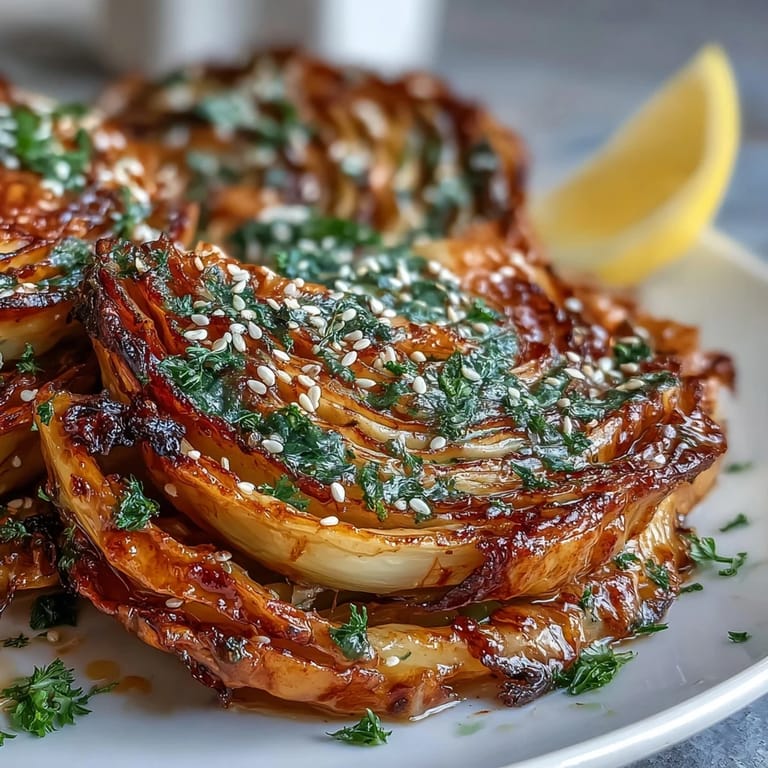
 This recipe taught me that the most satisfying meals don't need to be complicated—they just need good ingredients treated with intention. Roasted cabbage steaks with tahini feels like both comfort and celebration at the same time.
Recipe Questions & Answers
- → What's the best way to slice cabbage for roasting?
Cut the cabbage into thick rounds about 1-inch thick, working from the top down through the core. The core helps hold each steak together during roasting, so don't remove it before slicing.
- → Can I prepare this ahead of time?
You can slice and season the cabbage steaks several hours in advance, storing them covered in the refrigerator. The tahini sauce also keeps well for up to 3 days in the fridge—just give it a good whisk before serving.
- → How do I know when the cabbage is done?
Look for deeply browned, caramelized edges and a fork-tender center. The cabbage should yield easily when pierced but still maintain its steak shape. This usually takes 25-30 minutes at 425°F.
- → What can I serve with roasted cabbage steaks?
These pair wonderfully with quinoa, couscous, or warm flatbread. They also complement grilled chicken, lamb, or fish. The tahini sauce makes them substantial enough to stand alone as a light main.
- → Why does my tahini sauce sometimes seize up?
This is normal when tahini first meets lemon juice. Keep whisking and gradually add cold water—the sauce will smooth out into a creamy consistency. If it's too thick, add more water one tablespoon at a time.