 Pin It
 The first time I prepared Pavlova, the kitchen seemed to hum with anticipation. I remember hearing the gentle crack of eggs as I separated the whites, a little nervous about making something so feather-light and delicate. That day, sunlight streamed through the window, bouncing off bowls and shining on the mound of berries I washed. There was an excitement in the air not because of the occasion, but because this dessert felt like a quiet celebration of spring. It promised something both crisp and creamy, and I was genuinely curious to see if I could strike that balance.
I once made Pavlova for brunch on a Saturday, and my friends kept sneaking into the kitchen to ask how it was coming along. Someone joked that the house smelled sweeter than usual, and we laughed as the oven gave off a soft warmth. I remember carefully shaping the meringue while chatting about travel plans, and that little moment remains tied to this recipe whenever I make it. The final reveal, with bright berries and swirls of cream, always brings out spontaneous compliments.
Ingredients
- Egg whites: Room temperature whites whip up faster and taller for a billowy meringue.
- Superfine sugar: Gradually adding this creates that glossy, stable structure—don't rush, patience is key.
- Cornstarch: Helps the center stay soft and marshmallowy instead of just crunchy.
- White vinegar: Just a little bit balances the structure and flavor, an old baker's tip for meringue.
- Vanilla extract: Adds an aroma that makes the base taste inviting before you even bite in.
- Heavy whipping cream: Beating it cold means it holds shape best atop the pavlova.
- Powdered sugar: Makes whipped cream light and slightly sweet without graininess.
- Assorted fresh berries: Choose a mix for color and flavor—raspberries, strawberries, blueberries, blackberries.
- Fresh mint leaves: Optional, but they add a refreshing finish and beautiful green accent.
Tired of Takeout? 🥡
Get 10 meals you can make faster than delivery arrives. Seriously.
One email. No spam. Unsubscribe anytime.
Instructions
- Prep Your Tools:
- Gather your electric mixer, spatula, and mixing bowls—these make the process smoother and help avoid scrambling when it's time to beat egg whites.
- Create the Meringue Base:
- Start with room temperature egg whites; as you beat, listen for the soft swoosh until you spot gentle peaks forming.
- Gradually Sweeten:
- Add superfine sugar spoon by spoon, watching as it transforms from foamy into glossy, sturdy peaks—don't rush, it matters.
- Fold in Essentials:
- Gently mix in cornstarch, vinegar, and vanilla, being careful not to deflate the airy meringue—think gentle mountain folds with your spatula.
- Shape and Bake:
- Spoon meringue onto parchment paper, forming a rustic circle with slightly raised edges, then slide into a low oven to slowly crisp.
- Cool with Patience:
- Once baked, let the pavlova rest inside a slightly ajar oven—it will prevent cracks and keep the texture soft inside.
- Whip the Cream:
- Pour cold cream, powdered sugar, and vanilla into a bowl, then beat just to soft peaks; listen for the shift in sound.
- Assemble and Serve:
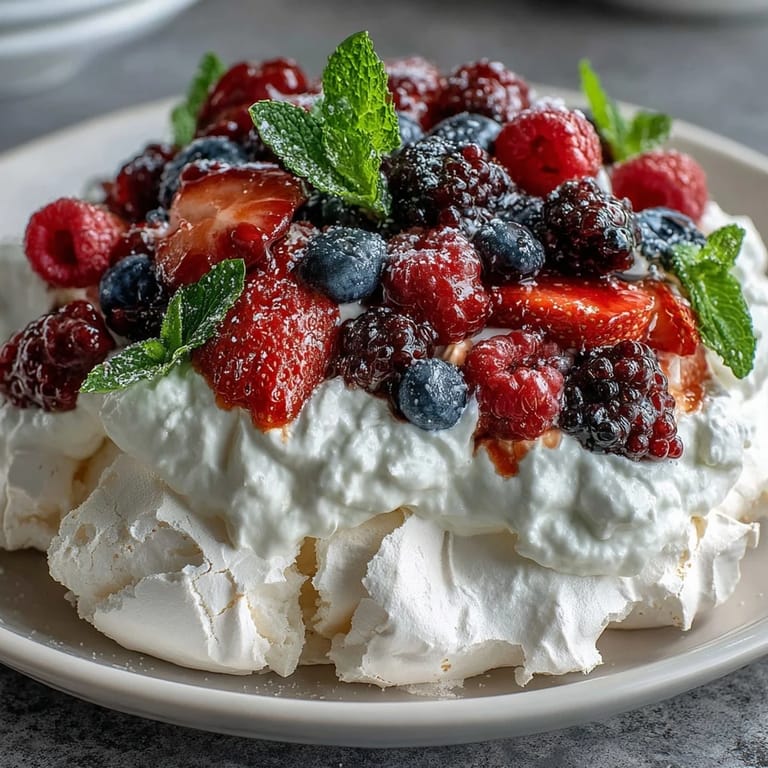
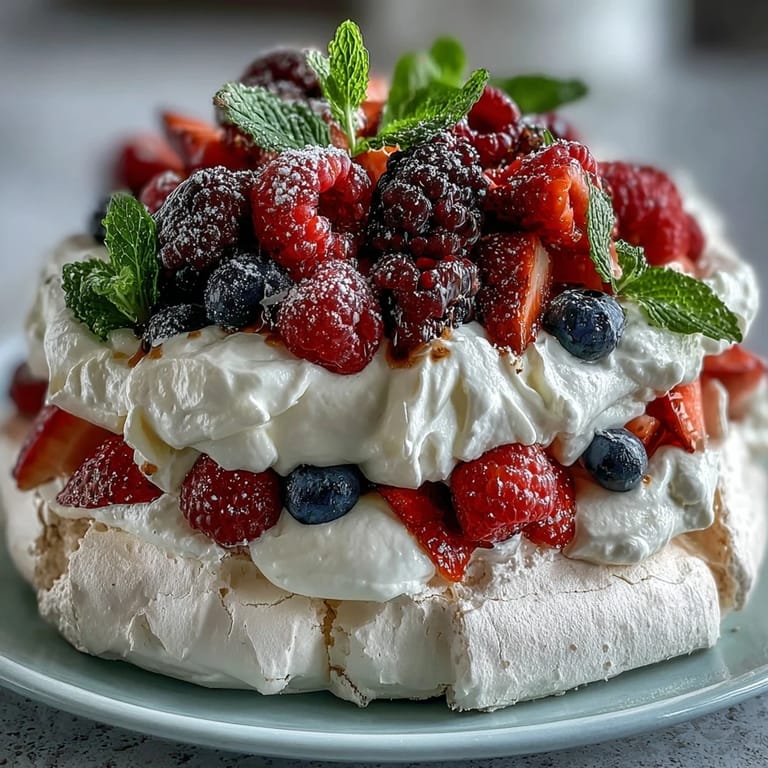
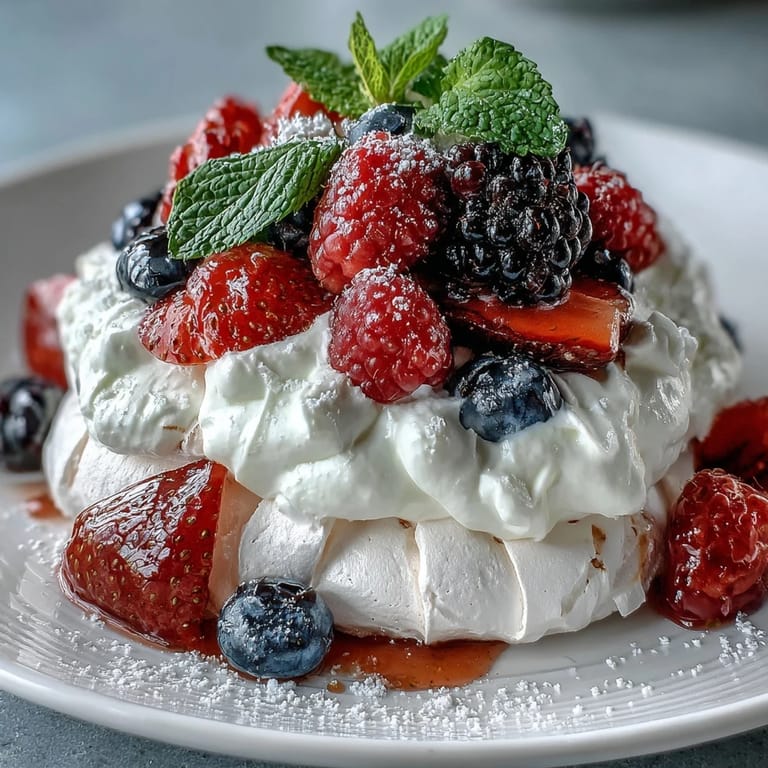
- Spread whipped cream generously over the center, mound berries on top, and finish with mint leaves if you like—serve at once.
 Pin It
 Watching my family try pavlova for the first time was priceless—there was a brief pause, some raised eyebrows, and then everyone dove in with more enthusiasm than dessert usually gets. That moment felt like introducing a new tradition, and now it's requested every spring when berries are at their best.
Getting the Perfect Meringue Texture
If you beat egg whites too quickly, they look stiff but won't hold shape after baking. Going slow and steady gives a meringue that's crunchy outside and pillowy inside—the contrast is what makes pavlova shine.
Choosing Your Berry Mix
The best pavlovas are decorated with a medley: fresh strawberries for sweetness, raspberries for tartness, blueberries for depth, and blackberries for juicy bursts. The colors always pop and everyone wants to snag their favorite fruit from the platter first.
What to Do If Your Pavlova Cracks
Even careful bakers sometimes get cracks in the meringue. Don't stress—just layer on extra whipped cream and berries to cover it, and it will still get raves.
- Topping the cracks with mint leaves adds elegance.
- A dusting of powdered sugar hides any imperfections.
- Remember: a cracked pavlova still tastes delicious.
 Pin It
 Serve pavlova soon after assembling to enjoy its crisp edges and creamy center at their freshest. These little moments over plates of pavlova are what turn ordinary gatherings into something memorable.
Recipe Questions & Answers
- → What makes the pavlova light and airy?
Beating egg whites until stiff peaks and baking at low heat creates the crisp exterior and soft center characteristic of pavlova.
- → Can I use other fruits besides berries?
Yes, you can substitute seasonal fruits like mango, kiwi, or passionfruit for a personalized topping.
- → How do I know when the meringue is ready?
The meringue should be firm on the outside and slightly sticky inside after baking and cooling in the oven.
- → Can I prepare pavlova in advance?
The meringue base can be made ahead of time; add whipped cream and berries just before serving for best texture.
- → Is pavlova suitable for gluten-free diets?
Yes, pavlova is naturally gluten-free. Always check ingredient labels to avoid cross-contamination.
- → What tools are needed?
An electric mixer, mixing bowls, spatula, baking sheet, and parchment paper are recommended for preparation.