 Pin It
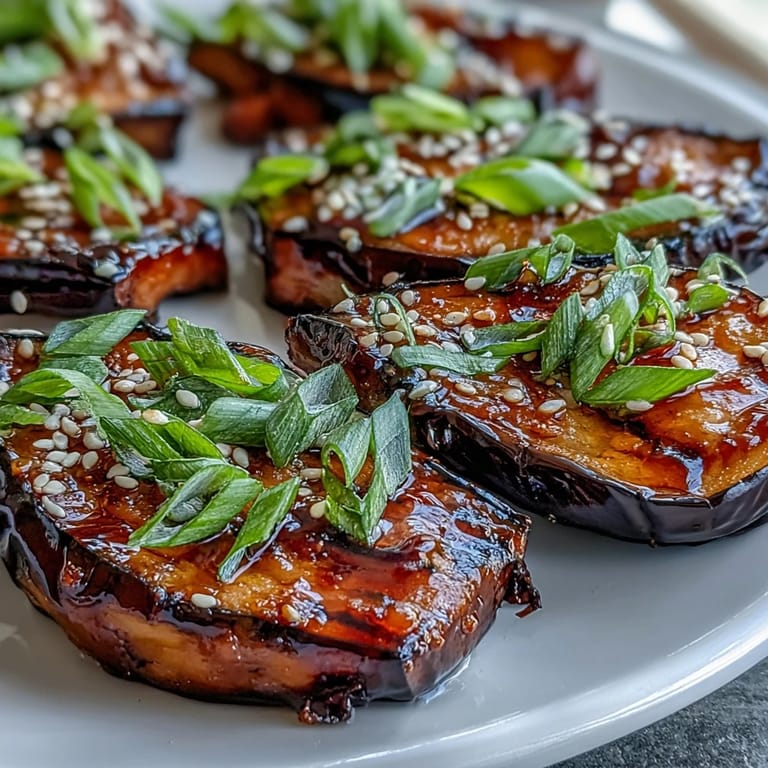
 My neighbor brought over a small wooden box of miso paste from her trip to Tokyo, and I stood in my kitchen staring at it for weeks, unsure what to do with something so precious and unfamiliar. One humid evening, I decided to roast some eggplant from the farmers market and brush it with that miso, just to see what would happen. The kitchen filled with this incredible umami aroma, caramelized and sweet, and I realized I'd stumbled onto something I'd been craving without knowing it.
I made this for a dinner party where everyone was being pretty quiet, and then someone took a bite and actually stopped mid-conversation. That one moment changed how I think about side dishes—suddenly they weren't just accompaniments, they were the star of the plate.
Ingredients
- Japanese eggplants: Look for the long, slender ones with thinner skin than globe eggplants; they're naturally sweeter and cook more evenly without getting waterlogged.
- White miso paste: This is your umami backbone, milder and slightly sweeter than red miso, which makes it perfect for glazing rather than drowning the delicate eggplant.
- Mirin: This sweet rice wine adds a subtle gloss and caramel undertone; don't skip it or substitute with regular sugar alone, as you'll lose that authentic depth.
- Sake: A splash of dry sake cuts through the sweetness and adds sophistication to the glaze with just a hint of nuttiness.
- Sesame oil: Use the toasted variety for maximum flavor; a little goes a long way, and it prevents sticking while adding richness.
- Toasted sesame seeds: These add crunch and nuttiness at the end, plus they make the dish look intentional and beautiful.
- Green onions: The fresh, mild bite brings the whole thing back to earth and cuts through the richness perfectly.
Tired of Takeout? 🥡
Get 10 meals you can make faster than delivery arrives. Seriously.
One email. No spam. Unsubscribe anytime.
Instructions
- Set up your space:
- Preheat your oven to 400°F and line a baking sheet with parchment paper; this small step prevents sticking and cleanup becomes a breeze.
- Prepare the eggplant:
- Slice each eggplant in half lengthwise and score the cut flesh in a crosshatch pattern, stopping just before the skin—this helps the seasonings penetrate and lets the heat reach deeper into the flesh. Brush that scored side lightly with sesame oil and arrange cut-side up on your sheet.
- Roast until golden:
- Slide everything into the oven for 20 to 25 minutes until the flesh turns golden and yields easily when you press it with a fork. You'll know it's ready when the edges start to caramelize slightly and smell nutty.
- Build your glaze:
- While the eggplant roasts, whisk together the miso paste, mirin, sake, sugar, and remaining sesame oil in a small bowl until you have a smooth, glossy paste with no lumps. Taste it if you're brave—it's funky and salty and sweet all at once.
- Glaze and broil:
- Remove the eggplant from the oven, spread a generous, even layer of glaze over the cut sides, then switch your oven to broil and return the sheet to the top rack for 2 to 3 minutes. Watch it like a hawk because the glaze bubbles and browns fast, and you want caramelization, not burnt.
- Finish with flourish:
- Pull it from the oven, sprinkle the toasted sesame seeds and green onions over the hot eggplant while everything is still steaming, and serve warm.
 Pin It
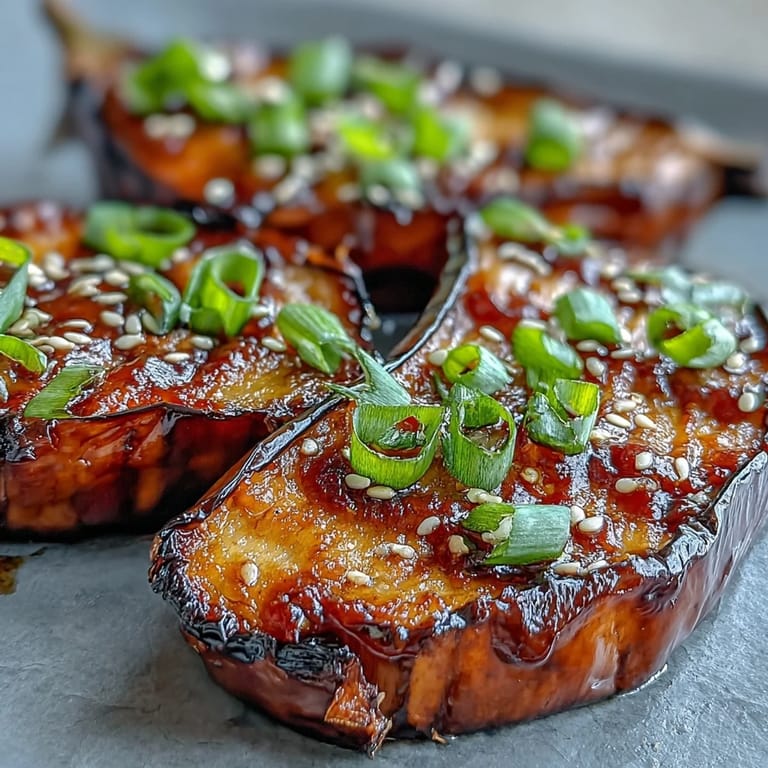
 My daughter asked me why eggplant tasted so different than what she'd had before, and I realized it wasn't the vegetable that had changed—it was the intention behind how it was cooked. That shift in perspective, from side dish to celebration, is what this glaze does.
The Magic of the Miso Base
Miso is essentially fermented soybeans that have aged into pure umami, and when you mix it with the sweet notes of mirin and sake, you're creating this complex flavor that tastes like it took hours to develop. The beautiful thing is that it takes maybe two minutes to whisk together, and it transforms the eggplant from mild and blank into something memorable and crave-worthy.
Timing and Temperature Matter
The roasting stage is where the eggplant's flesh becomes silky and sweet, developing those golden-brown edges that hint at caramelization. The broil is pure theater—it takes that glaze from matte to glossy and bubbling, and the heat helps the flavors meld into the eggplant rather than just sitting on top like a coating.
Variations and Serving Ideas
This dish works beautifully as part of a larger Japanese meal alongside rice and miso soup, but it's also elegant enough to stand alone as a vegetarian main course. I've added a drizzle of chili oil for heat, swapped the sesame seeds for crushed peanuts for a different crunch, and even served it at room temperature the next day stirred into rice for lunch.
- Try a touch of grated ginger in the glaze for a spicy warmth that plays well with the miso's umami.
- If you can't find mirin, a mix of honey and a splash of water works in a pinch, though the flavor won't be quite as delicate.
- Leftovers keep for three days in the fridge and reheat beautifully under the broiler for just a minute or two.
 Pin It
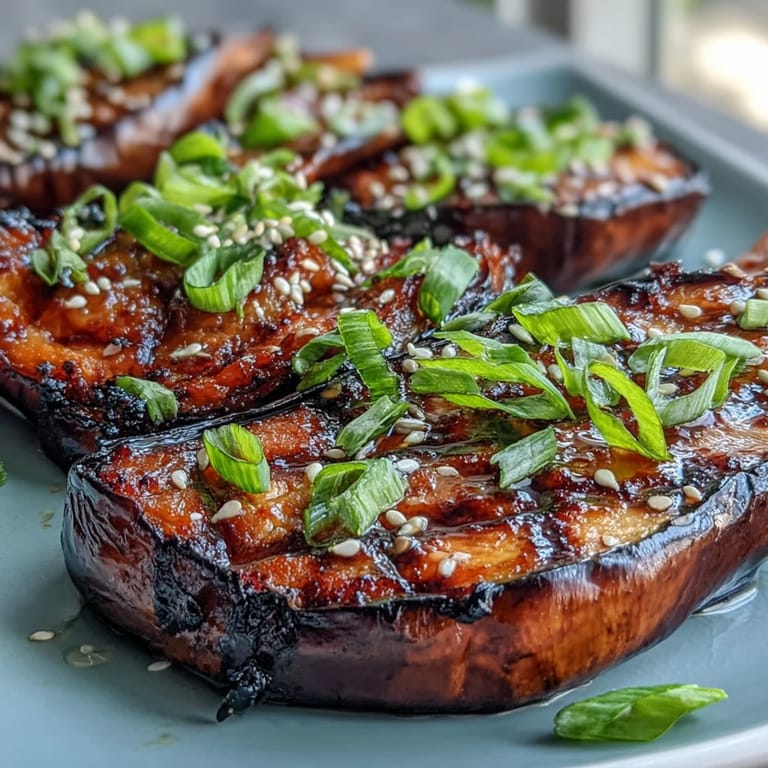
 This recipe taught me that vegetable cookery doesn't need to be complicated to be delicious—sometimes it just needs the right glaze and a little bit of heat. Serve it warm, watch people's faces light up, and know that you've just made something that tastes like care.
Recipe Questions & Answers
- → Can I use regular eggplant instead of Japanese?
Yes, though Japanese eggplants have thinner skin and a more delicate texture. Regular globe eggplants work well—just cut them into thick rounds or planks before roasting and adjust cooking time as needed.
- → What's the purpose of scoring the eggplant flesh?
Scoring creates a crosshatch pattern that helps the eggplant cook more evenly and allows the miso glaze to penetrate deeper into the flesh. It also increases surface area for better caramelization under the broiler.
- → Can I make this dish ahead of time?
The eggplant is best served fresh and warm, but you can roast the eggplants ahead and store them in the refrigerator. Bring to room temperature, apply the glaze, and broil just before serving for the crispiest caramelized finish.
- → Is there a substitute for mirin?
You can use a mixture of equal parts rice vinegar and sugar, or dry sherry with a pinch of sugar. The flavor profile will shift slightly, but the sweet acidity that balances the miso will still be present.
- → What type of miso works best for this dish?
White miso (shiro miso) is traditional for its mild sweetness and lighter color. Red miso will deliver a bolder, more intense flavor. Avoid using hatcho miso or very dark varieties, as they can overpower the delicate eggplant.
- → How do I prevent the glaze from burning under the broiler?
Watch closely during the last 2-3 minutes of broiling. The sugar in the glaze can go from caramelized to burned quickly. Keep the oven rack in the middle position rather than directly under the heat source for more controlled browning.