 Pin It
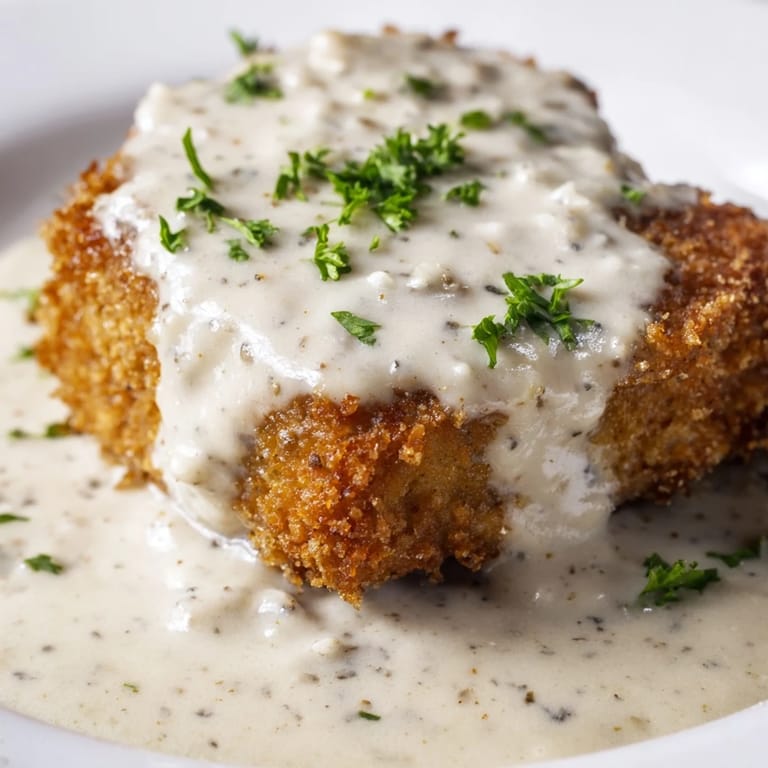
 My grandmother never measured anything when she made chicken fried steak, and I spent years trying to decode her pinch of this and handful of that. She'd stand at her stove in that faded floral apron, oil popping away, while I watched from the kitchen doorway, hoping to catch her secret. The real revelation came when I finally understood that the gravy isn't just an afterthought—it's the entire point of the exercise. Now Sunday dinner doesn't feel complete without that cream sauce pooling around the edges of the plate.
I made this for my husband's birthday dinner during our first year of marriage, back when our kitchen was barely big enough for one person. He'd grown up on his mother's version, and I was terrified it wouldn't measure up. When he took that first bite and closed his eyes for a good ten seconds, I knew I'd done something right. Now he requests it every year on the same date, and I've learned to double the gravy portion because he'll eat half of it straight from the whisk.
Ingredients
- 4 beef cube steaks: These have already been tenderized by the butcher, which saves you from pounding meat with a mallet and possibly waking up the neighbors
- 1 cup all-purpose flour: This is your first dredge station and the foundation of that seasoned coating
- 2 large eggs and 1 cup whole milk: Whisked together to create the glue that holds everything together
- 1 cup breadcrumbs: The secret weapon for extra crunch that pure flour can't achieve alone
- Garlic powder, onion powder, paprika: The holy trinity of flavor that makes people ask what you put in there
- 1/2 tsp cayenne pepper: Just enough warmth to make things interesting without overwhelming the gravy
- Vegetable oil: You need enough for shallow frying, about 1cm deep in the pan
- 3 tbsp pan drippings or butter: These golden bits become the backbone of your white gravy
- 3 tbsp flour and 2 cups milk: For transforming those drippings into liquid gold
Tired of Takeout? 🥡
Get 10 meals you can make faster than delivery arrives. Seriously.
One email. No spam. Unsubscribe anytime.
Instructions
- Set up your dredging station:
- Arrange three shallow bowls in a line, mixing the flour with all your spices in the first one, whisking the eggs with half the milk in the second, and pouring the breadcrumbs into the third. This assembly line approach keeps you from grabbing the wrong bowl with messy hands.
- Coat the steaks:
- Dredge each steak first in the seasoned flour, shaking off excess, then into the egg mixture, letting the extra drip off, and finally into the breadcrumbs, pressing gently to help them stick. The breading should feel secure, not falling off at the slightest touch.
- Fry until golden:
- Heat your oil until it shimmers but isn't smoking, then cook steaks for 3 to 4 minutes per side, listening for that satisfying sizzle. Transfer them to paper towels to drain while you make the gravy.
- Build the gravy:
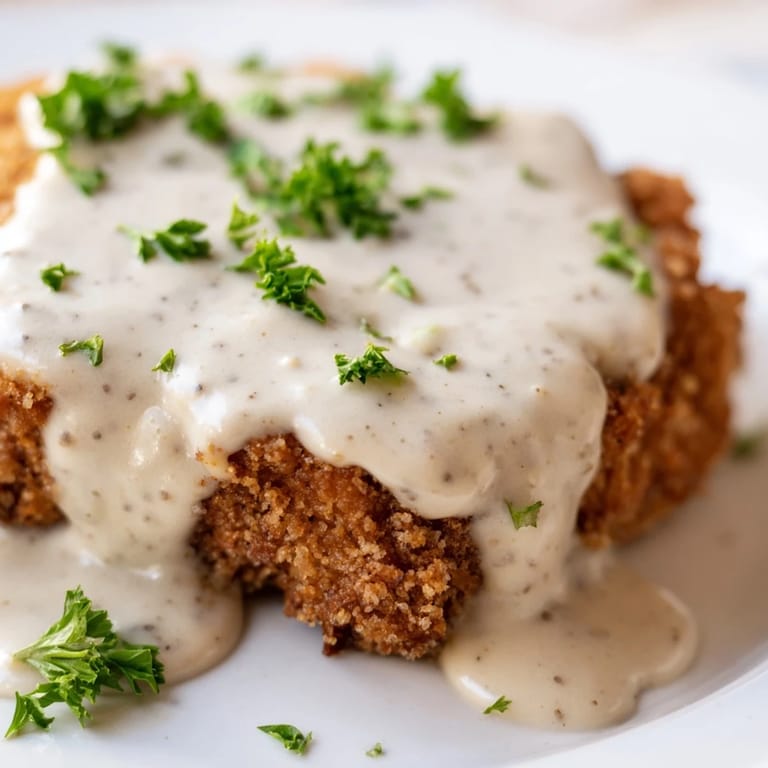
- Pour off all but 3 tablespoons of the frying oil, whisk in the flour and cook for one minute until it smells nutty, then gradually stream in the milk while whisking furiously. Keep whisking until it thickens into something that coats the back of a spoon, then season until it tastes like comfort itself.
 Pin It
 After my mother-in-law tried this recipe, she called me the next day to say she'd made it for her book club and everyone wanted to know where she learned the secret to perfect gravy. She wouldn't tell them it was my recipe, claiming she'd developed it through years of trial and error. I didn't mind, because that's exactly how recipes travel through families anyway, passed down with slight modifications and claimed as new discoveries.
Getting the Crisp Right
Oil temperature matters more than anything else here, too cool and you get grease-soaked breading, too hot and the outside burns before the inside heats through. I've learned to test with a breadcrumb—if it sizzles immediately and floats, you're ready. Some people swear by letting the breaded steaks sit in the refrigerator for an hour before frying, claiming it helps the coating set, though honestly, I rarely have that kind of patience.
Mastering White Gravy
The difference between good white gravy and great white gravy is learning to deglaze properly, scraping up every single browned bit from the bottom of the pan. Those little flavor bombs are what make restaurant gravy taste so much better than the stuff from a packet. If your gravy develops lumps, whisk vigorously or use an immersion blender—nobody needs to know about your moment of panic.
Make It Your Own
Once you've mastered the classic version, you can start playing around with different seasonings in the flour mixture—maybe some smoked paprika or a hint of cumin for a Southwestern twist. Some people add buttermilk to their egg wash for extra tang, though I find it can make the breading slide right off if you aren't careful. The beauty of this dish is how forgiving it is once you understand the basic technique.
- Pound the steaks between plastic wrap if they seem unusually thick
- Keep your finished steaks warm in a 200°F oven while frying the rest
- Always make more gravy than you think you'll need, because someone will want extra
 Pin It
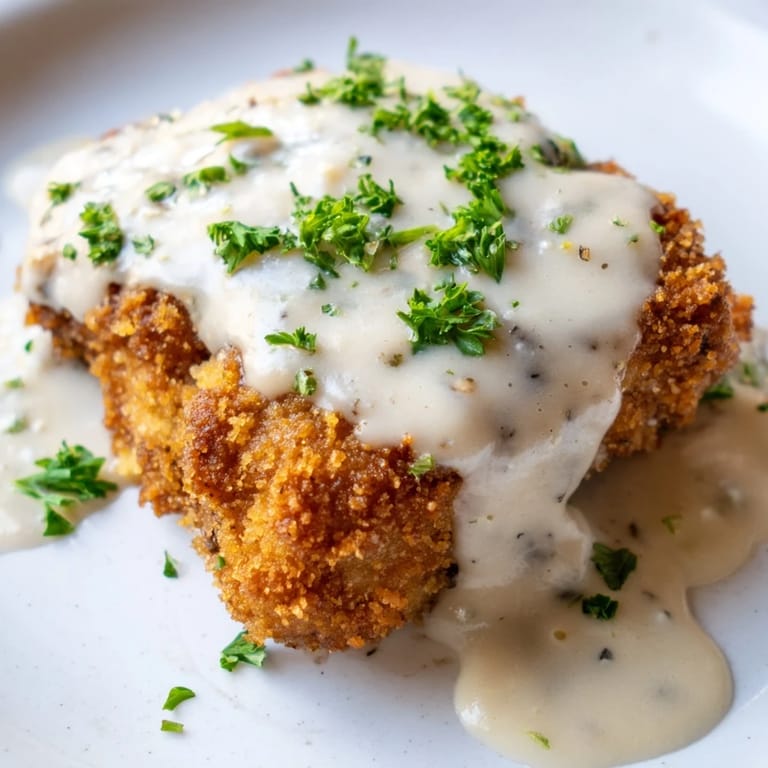
 There's something deeply satisfying about plating this dish, that golden gravy cascading over the crispy steak, steam rising into the kitchen air. It's not fancy food, but sometimes the most uncomplicated meals are the ones that bring us back to the table again and again.
Recipe Questions & Answers
- → What cut of meat works best for this dish?
Cube steaks are the traditional choice as they're already tenderized. You can also use round steak, sirloin, or other lean cuts that have been pounded thin with a meat mallet to break down the fibers and ensure tenderness.
- → How do I keep the coating from falling off during frying?
Make sure to pat the steaks completely dry before breading. Press the breadcrumbs firmly onto each steak to help them adhere. Let the breaded steaks rest for 10-15 minutes before frying to set the coating, and avoid overcrowding the pan which can cause the coating to soften.
- → Can I make this ahead of time?
While best served fresh, you can bread the steaks up to 24 hours ahead and refrigerate them. For leftovers, reheat in a 350°F oven for 10-15 minutes to restore crispness. The gravy can be made ahead and gently reheated, adding a splash of milk if it becomes too thick.
- → What's the secret to smooth, lump-free gravy?
Whisk the flour into the hot drippings constantly for a full minute to cook out the raw flour taste. When adding milk, pour it slowly while whisking vigorously. Continue whisking throughout the cooking process until the gravy reaches your desired consistency.
- → What sides complement this dish?
Creamy mashed potatoes are the classic pairing, soaking up the extra gravy. Other excellent options include buttered corn, steamed green beans, collard greens, macaroni and cheese, or a simple green salad with vinaigrette to balance the richness.